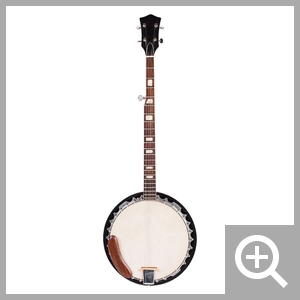
banjo
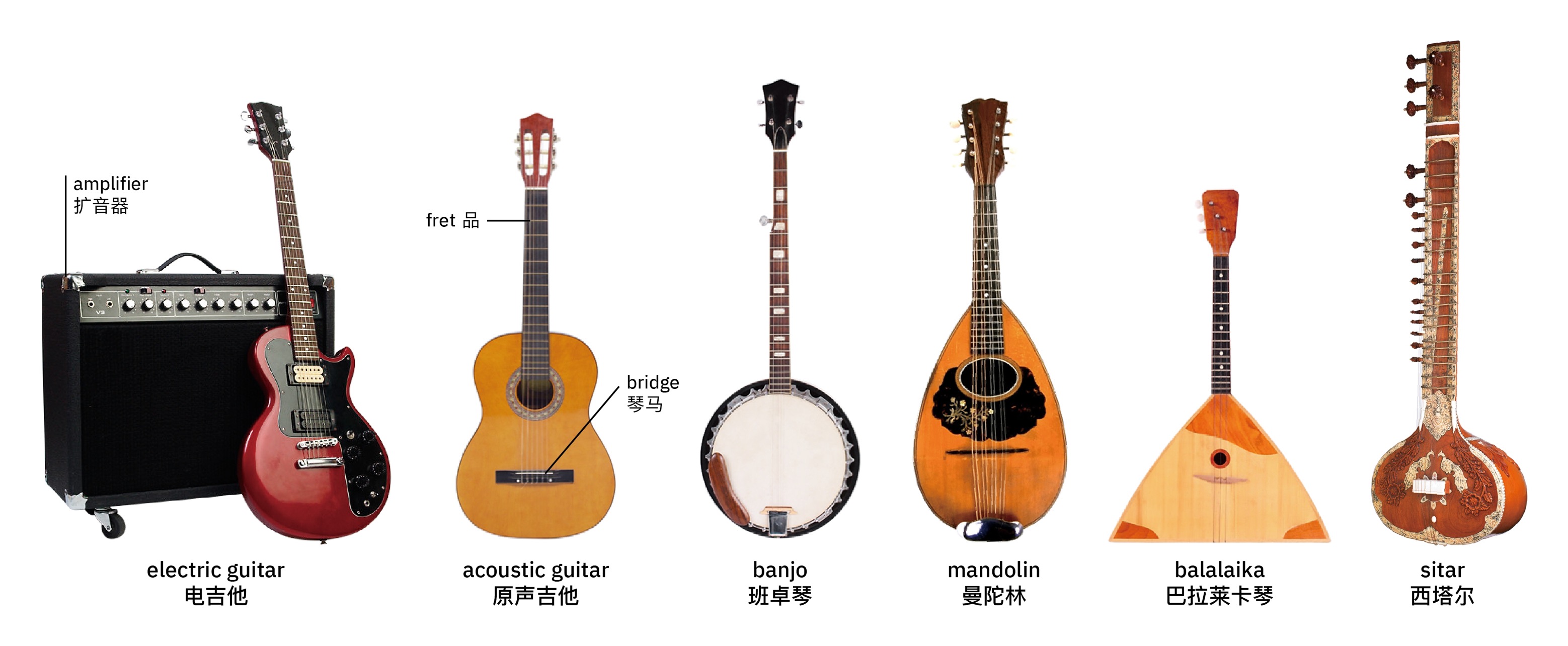
Longman Dictionary of Contemporary English 5++LDOCE 5++ban·jo /ˈbændʒəʊ $ -dʒoʊ/ noun (plural banjos) [countable]  APMAPMa musical instrument like a guitar, with a round body and four or more strings, played especially in country and western music 班卓琴 →5 see picture at 见图 stringed instrument
APMAPMa musical instrument like a guitar, with a round body and four or more strings, played especially in country and western music 班卓琴 →5 see picture at 见图 stringed instrumentExamples from the Corpus
banjo• Majella took up the fiddle, I got an accordion and Mary got a banjo.• A grandfatherly figure puffs on a sousaphone to the accompaniment of drums and banjo.• There are Eko 12-string necks and bodies, curious banjo necks, oddball Eko violin bass parts and lots, lots more.• And Samuel Turner Stevens, on fretless banjo, demonstrates the ties between white hillbilly music and rural blues.• Baryon performs solo and in duo with percussionist Mina Cinelu who also plays guitar, banjo, mandolin and synthesizer.• He picked some notes on his banjo.• Mulcahey put his banjo on his chair.• Mulcahey strummed his banjo and tapped the castanet again.Origin banjo (1700-1800) Probably from an African languageban·jo nounChineseSyllable
musical guitar, a a Corpus like with instrument
See ldoce4429jpg for more
banjo
ban‧jo /ˈbændʒəʊ $ -dʒoʊ/
 noun (plural banjos) [countable]
a musical instrument like a guitar, with a round body and four or more strings, played especially in country and western music
ban‧jo /ˈbændʒəʊ $ -dʒoʊ/
noun (plural banjos) [countable] Date: 1700-1800
Origin: Probably from an African language
Origin: Probably from an African language
a musical instrument like a guitar, with a round body and four or more strings, played especially in country and western music