berry
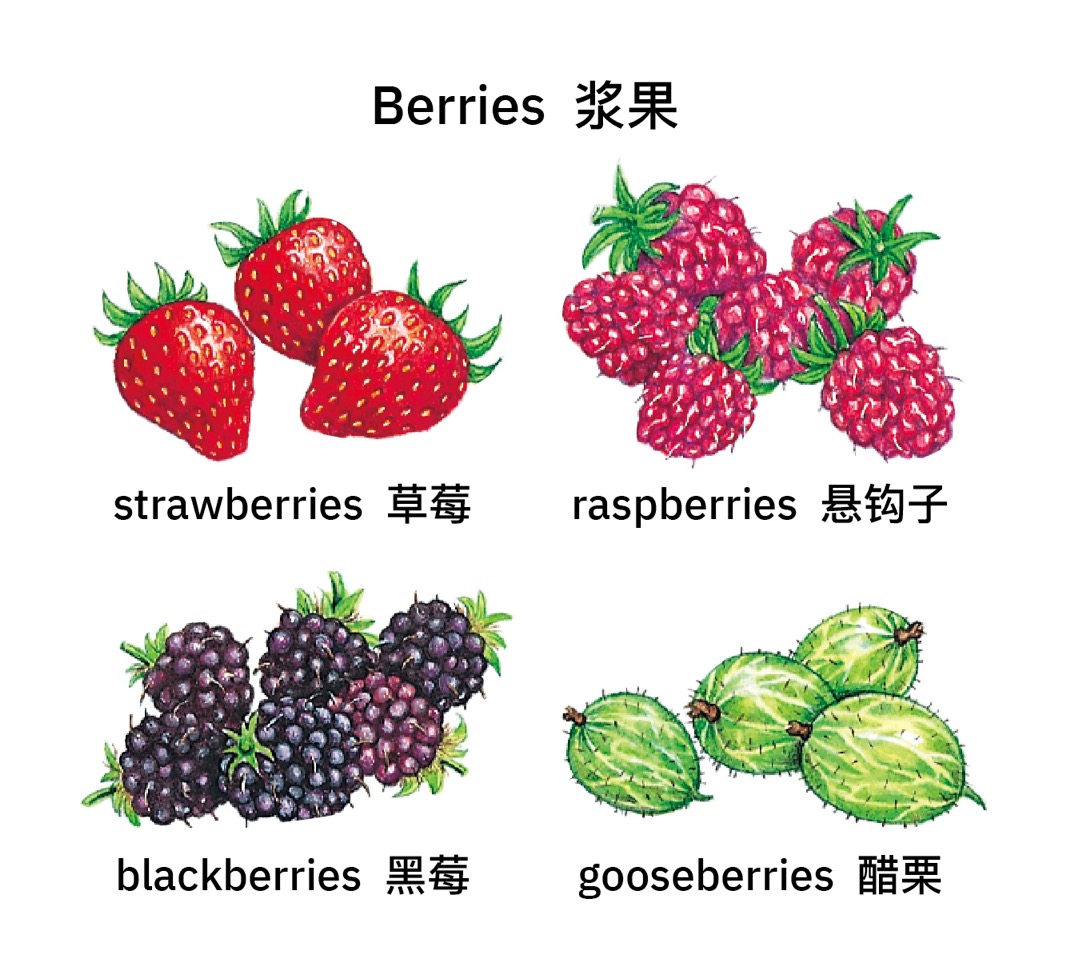
Longman Dictionary of Contemporary English 5++LDOCE 5++ber·ry /ˈberi/ ●●○ noun (plural berries) [countable] DFa small soft fruit with small seeds 浆果,莓
Examples from the Corpus
berry• If you are determined to cultivate fruits, then the safest bets are berry bushes and nut trees.• In autumn, berries burst from its flesh.• Return carcasses to pan and add stock, tomato puree, wine, vinegar, and juniper berries.• They had plenty of berries and there would be jobs ready and waiting for them.• Far, far away Into the earth we go, with the rain and the berries.• For puree, defrost the berries and press through a food mill.• The first few days, half the berries would go into the bucket and the other half would disappear into me.• The berries had long ago withered on the tree.Origin berry Old English berieber·ry nounChineseSyllable
Corpus small with fruit small soft seeds a
Berry
Berry, Chuck

(1926–) a US singer, guitar player, and songwriter whose music is in the rhythm and blues style. His many popular songs include Roll Over Beethoven (1956) and Johnny B. Goode (1958). His style had a big influence on 1960s musicians such as the Rolling Stones, and many people consider him to be the inventor of rock and roll.
Berry, Chuck
(1926–) a US singer, guitar player, and songwriter whose music is in the rhythm and blues style. His many popular songs include Roll Over Beethoven (1956) and Johnny B. Goode (1958). His style had a big influence on 1960s musicians such as the Rolling Stones, and many people consider him to be the inventor of rock and roll.
berry
ber‧ry /ˈberi/ noun (plural berries) [countable]
ber‧ry /ˈberi/
noun (plural berries) [countable] Language: Old English
Origin: berie
a small soft fruit with small seeds
Origin: berie