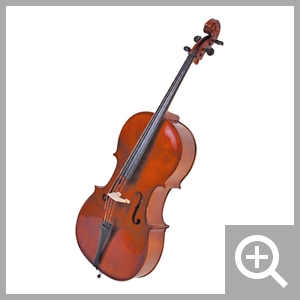
cello
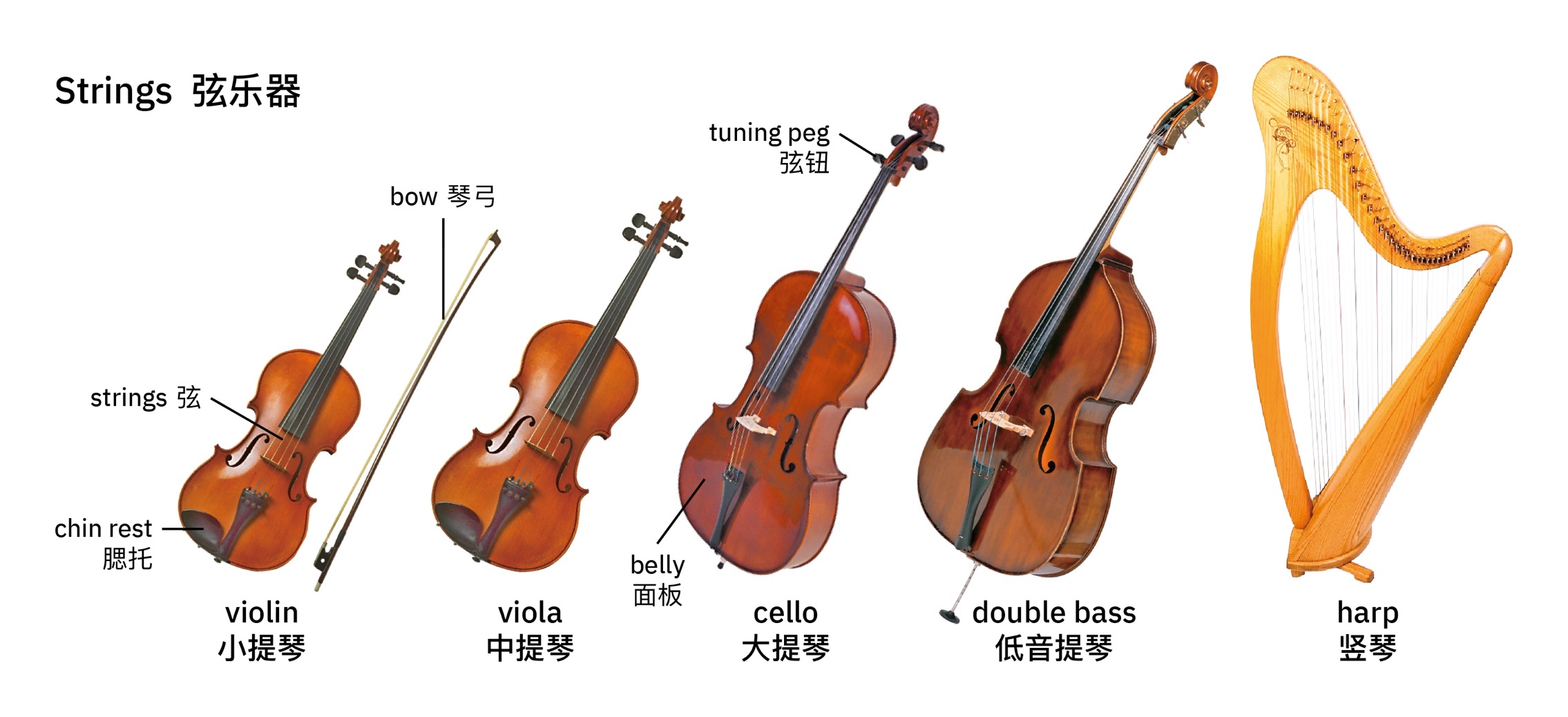
Longman Dictionary of Contemporary English 5++LDOCE 5++cel·lo /ˈtʃeləʊ $ -loʊ/ noun (plural cellos) [countable]  APMa musical instrument like a large violin that you hold between your knees and play by pulling a bow (=special stick) across the strings 大提琴 →5 see picture at 见图 stringed instrument
APMa musical instrument like a large violin that you hold between your knees and play by pulling a bow (=special stick) across the strings 大提琴 →5 see picture at 见图 stringed instrumentExamples from the Corpus
cello• The senior one was a fearsome, mustachioed amateur cello player who addressed every class in a terrifying bawl.• Not a note seems superfluous in this essay for flute, clarinet in A, vibraphone, piano, violin and cello.• I originally studied classical cello from age seven until I was fourteen, then moved to the upright bass.• I had never heard cellos and low strings added to rock songs.• The violas can be used, however, also the cellos if they can be spared from the energetic bass part.• She did not leave the hospital without the cello she played in a London symphony orchestra.Origin cello (1800-1900) violoncello “cello” ((18-21 centuries)), from Italian, from violone “large stringed instrument”, from viola; → VIOLAcel·lo nounChineseSyllable
you that Corpus musical large violin a like a instrument
See ldoce4429jpg for more
cello
cel‧lo /ˈtʃeləʊ $ -loʊ/
 noun (plural cellos) [countable]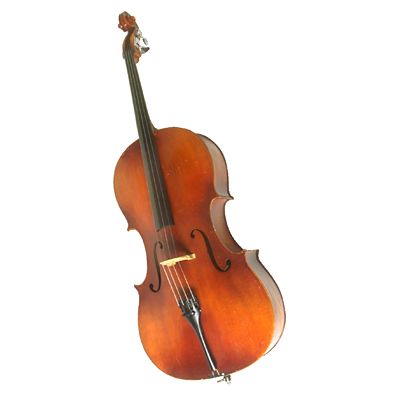
a musical instrument like a large violin that you hold between your knees and play by pulling a bow (=special stick) across the strings
cel‧lo /ˈtʃeləʊ $ -loʊ/
noun (plural cellos) [countable] Date: 1800-1900
Origin: violoncello 'cello' (18-21 centuries), from Italian, from violone 'large stringed instrument', from viola; ⇨ viola
Origin: violoncello 'cello' (18-21 centuries), from Italian, from violone 'large stringed instrument', from viola; ⇨ viola
a musical instrument like a large violin that you hold between your knees and play by pulling a bow (=special stick) across the strings