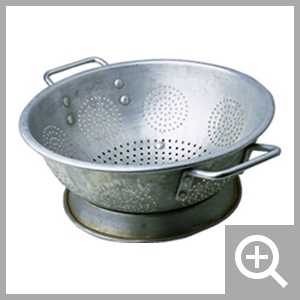
colander
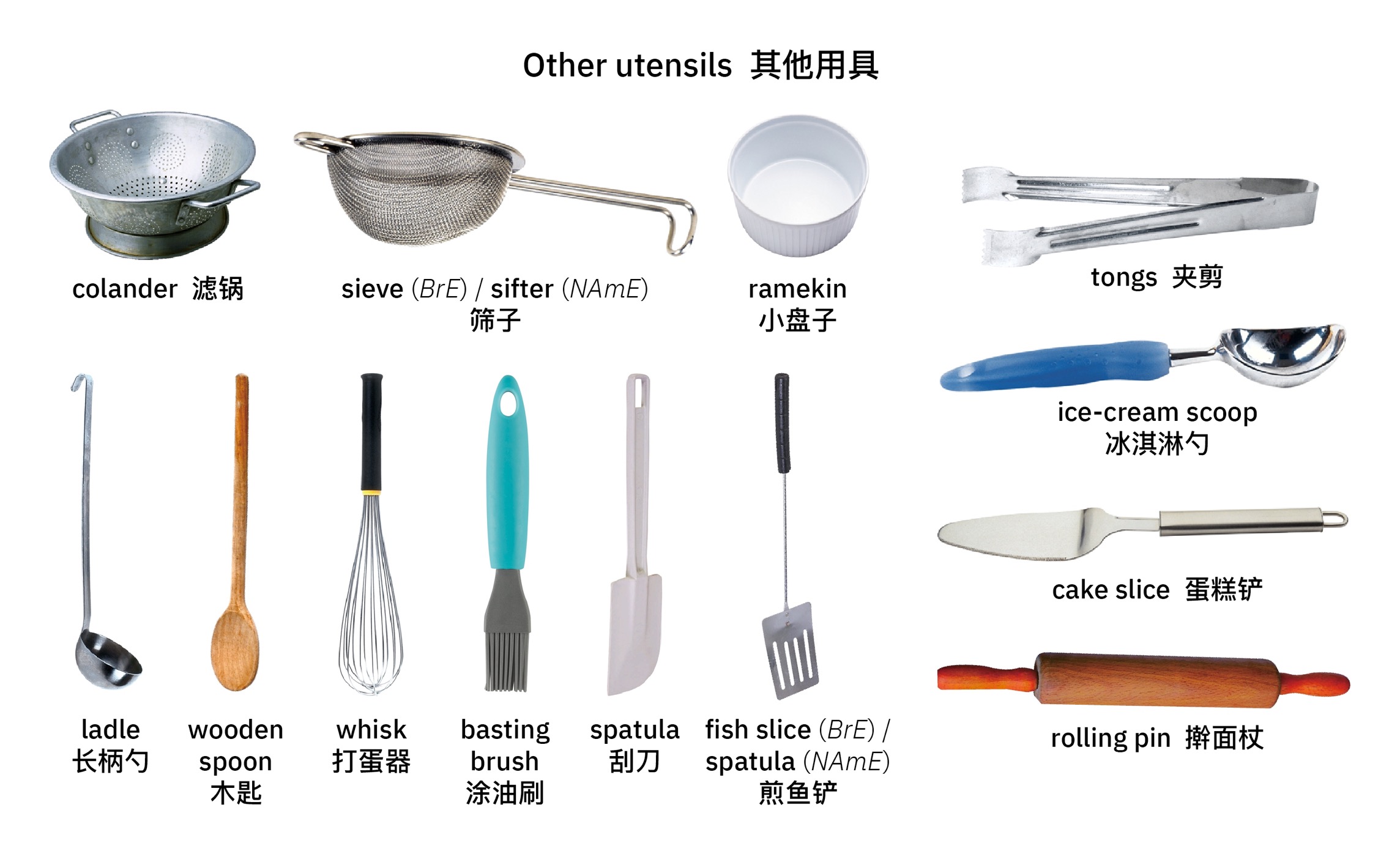
Longman Dictionary of Contemporary English 5++LDOCE 5++col·an·der /ˈkʌləndə, ˈkɒ- $ ˈkʌləndər, ˈkɑː-/ noun [countable]  DFUa metal or plastic bowl with a lot of small holes in the bottom and sides, used to separate liquid from food 滤盆,滤器 →4 See picture on 见图 Page A5 Where to eat 吃东西的地方
DFUa metal or plastic bowl with a lot of small holes in the bottom and sides, used to separate liquid from food 滤盆,滤器 →4 See picture on 见图 Page A5 Where to eat 吃东西的地方Examples from the Corpus
colander• For sauce, defrost the berries in a colander over a bowl.• Drain in a colander, pressing the leaves to extract all the juice.• When mussels have opened, drain them in a colander set over a bowl.• Drain well in a colander and divide them among individual bowls or put them in a large soup tureen.• Strain the liquid through a colander covered with muslin, and retain the liquid.• Line colander with clean piece of cloth and pour yogurt into it.• Cover top of colander with wax paper and set over sink to drain 24 hours.• Use colander to strain. 5 Tip peas into serving dish. 6 Get butter from refrigerator.Origin colander (1300-1400) Probably from Old Provençal colador, from Medieval Latin colatorium, from Latin colare “to sieve”col·an·der nounChineseSyllable
small metal of a a holes lot bowl plastic Corpus or with
colander
col‧an‧der /ˈkʌləndə, ˈkɒ- $ ˈkʌləndər, ˈkɑː-/
 noun [countable]
a metal or plastic bowl with a lot of small holes in the bottom and sides, used to separate liquid from food
col‧an‧der /ˈkʌləndə, ˈkɒ- $ ˈkʌləndər, ˈkɑː-/
noun [countable] Date: 1300-1400
Origin: Probably from Old Provençal colador, from Medieval Latin colatorium, from Latin colare 'to sieve'
Origin: Probably from Old Provençal colador, from Medieval Latin colatorium, from Latin colare 'to sieve'
a metal or plastic bowl with a lot of small holes in the bottom and sides, used to separate liquid from food