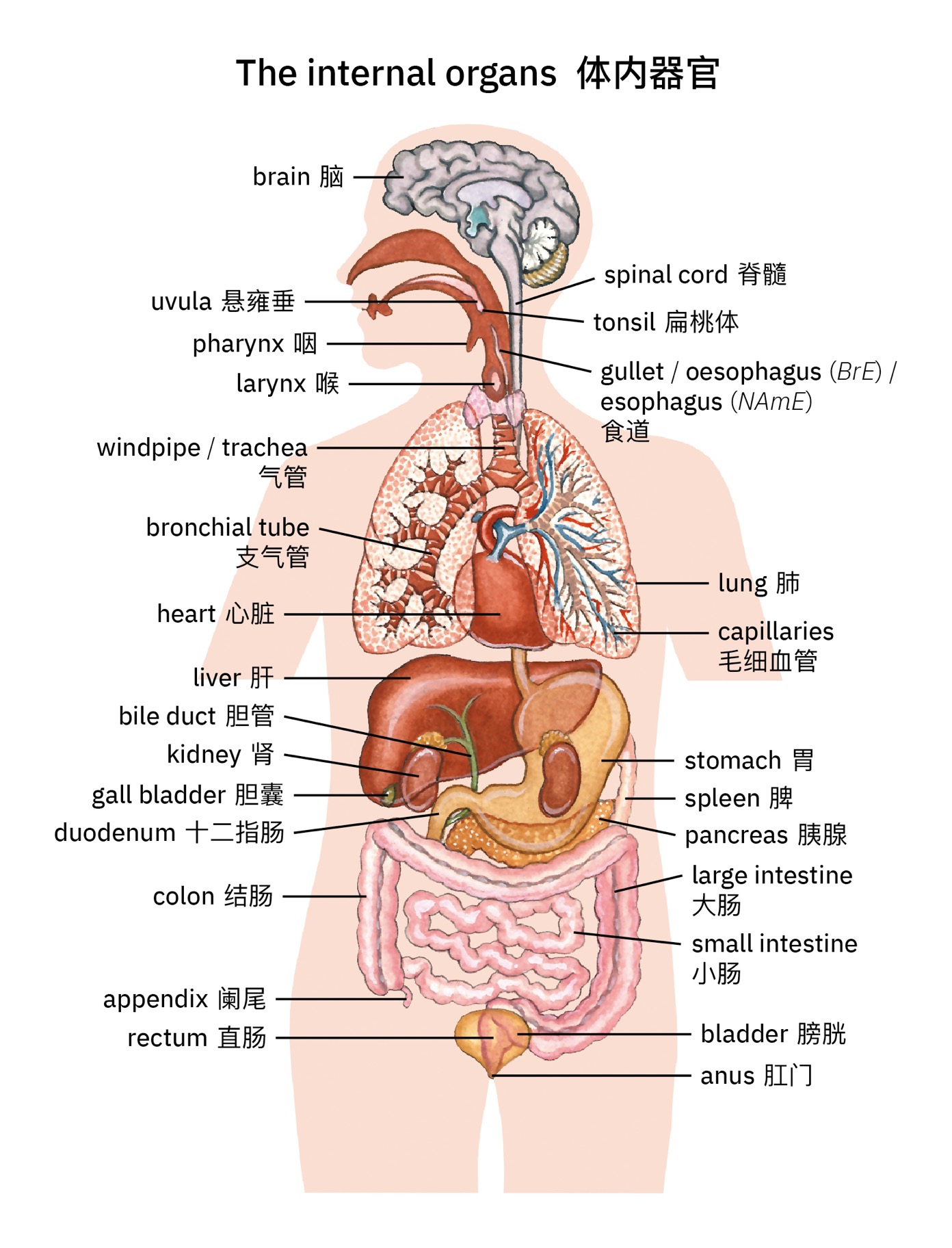
colon
Longman Dictionary of Contemporary English 5++LDOCE 5++co·lon /ˈkəʊlən $ ˈkoʊ-/ ●○○ noun [countable] 1. HBH technical the lower part of the bowels, in which food is changed into waste matter 结肠2. SLAthe sign (:) that is used in writing and printing to introduce an explanation, example, quotation(1) etc 冒号 → semicolon
Examples from the Corpus
colon• Colons and Semicolons Most business documents contain colons that serve one or two functions.• Answer: b. Why: Only use a colon when the statement completely and naturally stops.• This experiment shows a previously unknown dietary effect upon bacterial activity in the human colon.• We elected to include this patient in the study since the entire remaining right colon had active ulcerative colitis.• Eighty eight percent examinations reached the right colon.• Unfortunately in the colon the situation is far less clear.• Despite research contributions for many countries the normal and pathological motor function of the colon remains poorly understood.• These L4 then emerge on to the mucosal surface, migrate to the colon, develop to the adult stage.Origin colon 1. (1300-1400) Latin Greek kolon “large intestine, food, meat”2. (1500-1600) Latin “part of a poem”, from Greek kolon “arm or leg, part of a poem”co·lon nounChineseSyllable
bowels, the lower Corpus of part the
colon
co‧lon /ˈkəʊlən $ ˈkoʊ-/
 noun [countable]
Language: Latin
Origin: Greek kolon 'large intestine, food, meat'
Language: Latin
Origin: 'part of a poem', from Greek kolon 'arm or leg, part of a poem'1. technical the lower part of the bowels, in which food is changed into waste matter
2. the sign (:) that is used in writing and printing to introduce an explanation, example, quotation(1) etc ⇨ semicolon
■ types of punctuation mark
▪apostrophe the sign ' that is used to show that one or more letters or numbers have been left out, as in don’t, or used before ‘s’ to show that something belongs to someone or something, as in Mark’s dog
▪brackets British English, parentheses AmE and BrE formal a pair of signs used for enclosing information that interrupts a sentence
▪colon the sign : that is used to introduce an explanation, example, quotation etc
▪semicolon the sign ; that is used to separate words in a list, or different parts of a sentence that can be understood separately
▪comma the sign , that is used to separate things in a list, or between two clauses in a sentence
▪hyphen the sign – that is used to join words or syllables
▪dash the sign — that is used to separate two closely related parts of a sentence, especially in more informal English
▪full stop British English, period American English the sign . that is used to mark the end of a sentence or the short form of a word
▪exclamation mark British English, exclamation point American English the sign ! that is used after a sentence or word that expresses surprise, anger, or excitement
▪question mark the sign ? that is used at the end of a question
▪quotation marks (also inverted commas British English) a pair of signs ‘ and ’ that are put around words, especially to show that you are quoting what someone has said
co‧lon /ˈkəʊlən $ ˈkoʊ-/
noun [countable] Sense 1
Date: 1300-1400Language: Latin
Origin: Greek kolon 'large intestine, food, meat'
Sense 2
Date: 1500-1600Language: Latin
Origin: 'part of a poem', from Greek kolon 'arm or leg, part of a poem'
2. the sign (:) that is used in writing and printing to introduce an explanation, example, quotation(1) etc ⇨ semicolon
| THESAURUS |
▪
▪
▪
▪
▪
▪
▪
▪
▪
▪
▪