footprint
Longman Dictionary of Contemporary English 5++LDOCE 5++foot·print /ˈfʊtˌprɪnt/ noun [countable] 1  MARK (also footmark) a mark made by a foot or shoe 脚印,足迹 We followed the footprints of a deer in the snow. 我们追踪雪地里一头鹿的足迹。► see thesaurus at effect →5 see picture at 见图 fingerprint2 technical the amount of space on a desk that a computer uses 〔计算机在桌子上的〕占位面积 PCs with a 50% smaller footprint than other models 占位面积比其他型号小50%的个人计算机n3 the effect that a person’s or organization’s activities have on the environment Answer these questions to calculate your business’s environmental footprint.
MARK (also footmark) a mark made by a foot or shoe 脚印,足迹 We followed the footprints of a deer in the snow. 我们追踪雪地里一头鹿的足迹。► see thesaurus at effect →5 see picture at 见图 fingerprint2 technical the amount of space on a desk that a computer uses 〔计算机在桌子上的〕占位面积 PCs with a 50% smaller footprint than other models 占位面积比其他型号小50%的个人计算机n3 the effect that a person’s or organization’s activities have on the environment Answer these questions to calculate your business’s environmental footprint.Examples from the Corpus
footprint• The smooth surface makes it easier for agents to detect footprints in the road.• Agents drag tires to detect footprints in sand or dirt roads.• She pulled through the clutching shrubbery and skimmed back up the steps, realizing she was leaving footprints of damp earth.• Mine are not the only footprints on the road I am taking: There are others, but they are not Birkenstocks.• I looked everywhere, but there was nobody, and no other footprint.• For I was not the first to have stood in Balboa's footprints.• a deer's footprints in the snow• The footprints in the yard were too big to be a dog's.• He ran into the hallway, leaving wet footprints behind him.• They left two trails of wet footprints.From Longman Business Dictionaryfootprintfoot‧print /ˈfʊtˌprɪnt/ noun [countable]COMPUTING the space on the surface of a desk that is filled by a computerThese PCs have a 50% smaller footprint than previous models.foot·print nounLDOCE OnlineChineseSyllable
made Business foot Corpus by a mark a
footprint
foot‧print /ˈfʊtˌprɪnt/
 noun [countable]
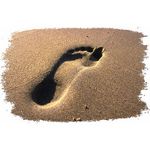
1. (also footmark) a mark made by a foot or shoe:

We followed the footprints of a deer in the snow.
2. technical the amount of space on a desk that a computer uses:
PCs with a 50% smaller footprint than other models
▪ effect a change that is caused by an event, action etc: The people in this area are still suffering from the effects of the famine. | The treatment had little or no effect.
▪impact an effect that happens as a result of something important, especially a big and permanent effect: Changes in technology have had a massive impact on the way we work. | the environmental impact of industrial activity
▪influence the effect that something has on people’s opinions or behaviour, or on how something develops: American television has had a big influence on popular culture in the west. | His ideas had a lot of influence at the time.
▪side effect an unwanted and unplanned effect that something has – used especially about drugs and medical treatment: Common side effects of the drug may include headaches and muscle pains.
▪after-effects British English, aftereffects American English bad effects that continue for a long time after the thing that caused them: A traumatic experience can have severe psychological after-effects. | the after-effects of the war
▪repercussions /ˌriːpəˈkʌʃəns $ -pər-// the effects that happen later as a result of an event or decision, especially a range of effects that continue for a long time: The scandal could have serious repercussions for her career. | The judge’s decision is likely to have important repercussions for future cases of this kind.
▪a knock-on effect British English used when something has an effect on something, which then has an effect on something else: Higher oil prices have a knock-on effect on other fuels.
▪footprint the effect that human activities have on the environment, caused by using up its natural resources, pollution, waste etc: Businesses all over the world must attempt to reduce their environmental footprint. | The house has a low carbon footprint (=it uses very little energy from carbon and therefore is good for the environment).
foot‧print /ˈfʊtˌprɪnt/
noun [countable]1. (also footmark) a mark made by a foot or shoe:
2. technical the amount of space on a desk that a computer uses:
| THESAURUS |
▪
▪
▪
▪
▪
▪
▪