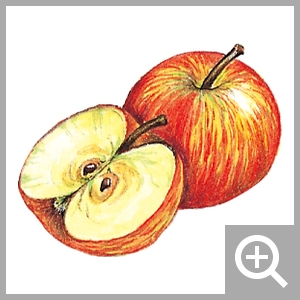
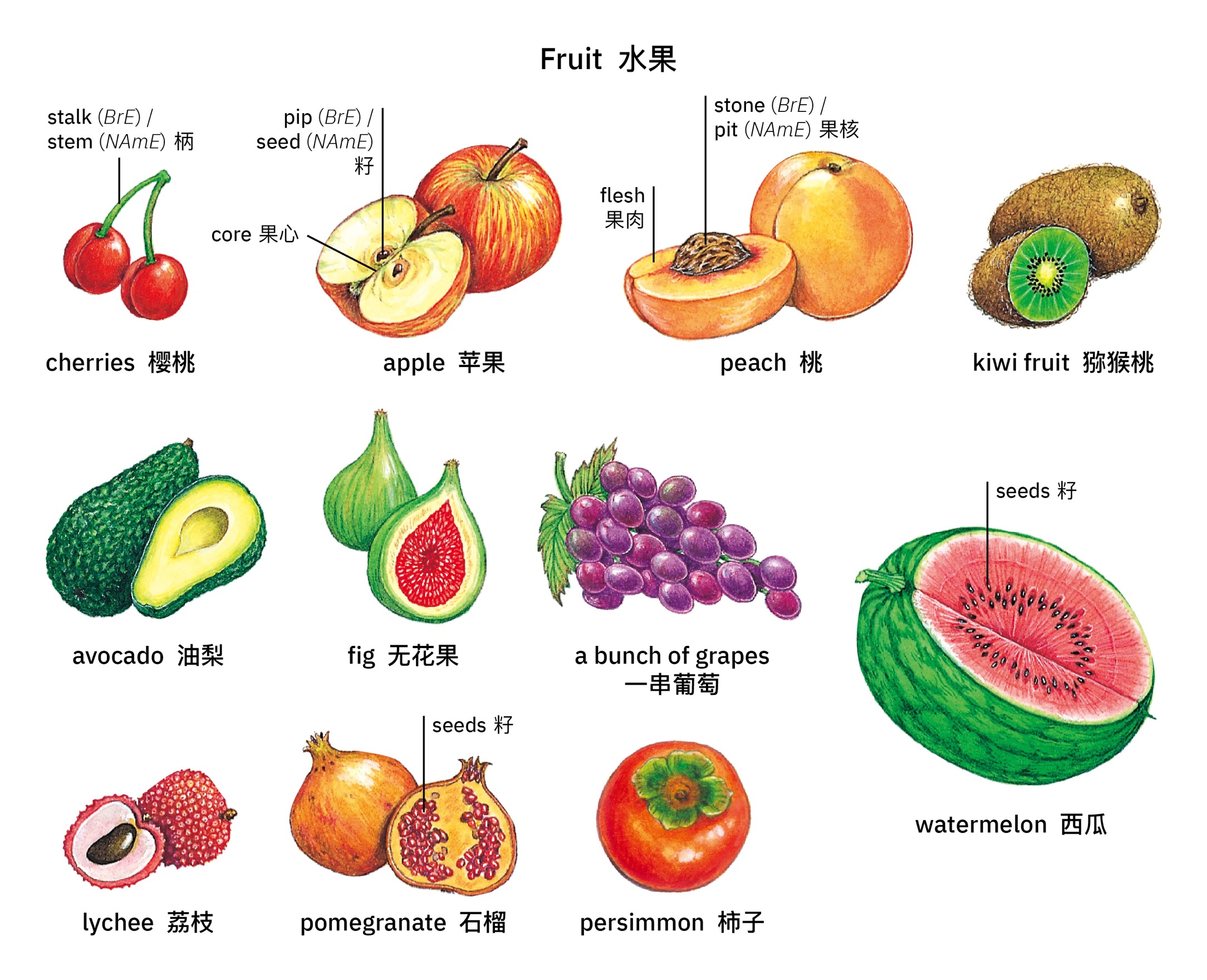
fruit
Word family
Longman Dictionary of Contemporary English 5++LDOCE 5++ldoce_805_pfruit1 /fruːt/ ●●● S2 W2 noun (plural fruit or fruits) 1 [countable, uncountable]DF something that grows on a plant, tree, or bush, can be eaten as a food, contains seeds or a stone, and is usually sweet 水果 Try to eat plenty of fresh fruit. 尽量多吃新鲜水果。 fruit and vegetables 水果和蔬菜 a glass of fruit juice 一杯果汁 a large garden with fruit trees 种了果树的大花园 → dried fruit, soft fruit5 Grammar 语法Fruit is usually uncountable. fruit一般不可数Fruit is inexpensive here.这里水果很便宜。It is used as a countable noun mainly to refer to one or more types of fruit. 作可数名词时主要指一种或多种水果oranges and other citrus fruits橙子及其他柑橘类水果n GRAMMAR: Countable or uncountable?• Fruit is usually uncountable: fruit一般不可数I love fruit. ✗Don’t say: I love fruits.• Fruit is used as a countable noun when talking about particular types of fruit: They grow mainly citrus fruits. 2. [countable, uncountable] technicalHBP the part of a plant, bush, or tree that contains the seeds 果实3 the fruit(s) of something RESULTthe good results that you have from something, after you have worked very hard 某事物的成果 I’m looking forward to retirement and having time to enjoy the fruits of my labour (=the results of my hard work). 我盼望着退休,好有时间来享受自己的劳动成果。4. in fruit technicalHBP trees, plants etc that are in fruit are producing their fruit 正在结果实的5. the fruits of the earth literaryDN all the natural things that the earth produces, such as fruit, vegetables, or minerals 大地[大自然]的产物〔如水果、蔬菜或矿物等〕 → bear fruit at bear1(9)Examples from the Corpus
fruit• We usually eat fresh fruit after dinner.• Pomiculture - the cultivation of fruit.• Jack grows a variety of fruits and vegetables in the garden.• Then it was usually delicatessen, a filled roll or some cheese or fruit, anything that could be gobbled up quickly.• The seasons of history cause the flowers and the fruit to fall, but the tree remains.• As the deficit developed, it enabled the fruits of that revolution to seem greater to consumers than they really were.• As for this year's event the fruits of its endeavours may not be fairly assessed in the short term.• As they toured the country showing the fruits of seismic tomography, they fanned the flames of interest in this new technique.fresh fruit• You can wash it all down with a fresh fruit smoothie for $ 3.• A big bowl of salad, some crusty bread and fresh fruit is all you would need to serve alongside.• Today, it is this factor which determines whether they will be sold as fresh fruit or processed into juice or sauce.• Like most fresh fruit, they are a good source of fibre and Vitamin C and are a useful slimming food.• Michele followed her in with steaming bowls of soup, a cheese board, and a selection of fresh fruit.• Leaving potatoes unpeeled and providing fresh fruit instead of fat- and sugar-rich puddings is a great time-saver.• Federal health officials suspect fresh fruit as the source behind the outbreak, but admit the cause or causes may be elusive.• During the day I drink only mineral water, fresh fruit juice, coffee or tea.fruit2 verb [intransitive] technical HBPif a tree or a plant fruits, it produces fruit 〔树或植物〕结果实→ See Verb tableExamples from the Corpus
fruit• The city was all cracks and crevices wetly fruiting, burgeoning.• The black and white feeds in a narrow range of tree species and when none is fruiting it eats leaves.Origin fruit1 (1100-1200) Old French Latin fructus, from frui “to enjoy, have the use of”fruit1 noun →n GRAMMAR1 →5 REGISTER1fruit2 verbLDOCE OnlineChinese
a Corpus on or that plant, something grows tree,
fruit
fruit1 S2 W3 /fruːt/ 
 noun (plural fruit or fruits)

Try to eat plenty of fresh fruit.
fruit and vegetables
a glass of fruit juice
a large garden with fruit trees ⇨ dried fruit, soft fruit
GRAMMAR
Fruit is usually uncountable:
▪Fruit is inexpensive here. It is used as a countable noun mainly to refer to one or more types of fruit:
▪oranges and other citrus fruits
2. [uncountable and countable] technical the part of a plant, bush, or tree that contains the seeds
3. the fruit(s) of something the good results that you have from something, after you have worked very hard:
I’m looking forward to retirement and having time to enjoy the fruits of my labour (=the results of my hard work).
4. in fruit technical trees, plants etc that are in fruit are producing their fruit
5. the fruits of the earth literary all the natural things that the earth produces, such as fruit, vegetables, or minerals
⇨ bear fruit at bear1(9)
fruit2 verb [intransitive] technical
| I |
noun (plural fruit or fruits) Word Family: noun: fruit, fruition, fruiterer; adjective: fruitful ≠ fruitless, fruity; verb: fruit; adverb: fruitfully ≠ fruitlessly
Date: 1100-1200
Language: Old French
Origin: Latin fructus, from frui 'to enjoy, have the use of'
1. [uncountable and countable] something that grows on a plant, tree, or bush, can be eaten as a food, contains seeds or a stone, and is usually sweet:Language: Old French
Origin: Latin fructus, from frui 'to enjoy, have the use of'
GRAMMAR
Fruit is usually uncountable:
▪
▪
2. [uncountable and countable] technical the part of a plant, bush, or tree that contains the seeds
3. the fruit(s) of something the good results that you have from something, after you have worked very hard:
4. in fruit technical trees, plants etc that are in fruit are producing their fruit
5. the fruits of the earth literary all the natural things that the earth produces, such as fruit, vegetables, or minerals
⇨ bear fruit at bear1(9)
| II |
verb [intransitive] technical Word Family: noun: fruit, fruition, fruiterer; adjective: fruitful ≠ fruitless, fruity; verb: fruit; adverb: fruitfully ≠ fruitlessly
if a tree or a plant fruits, it produces fruit