harbour
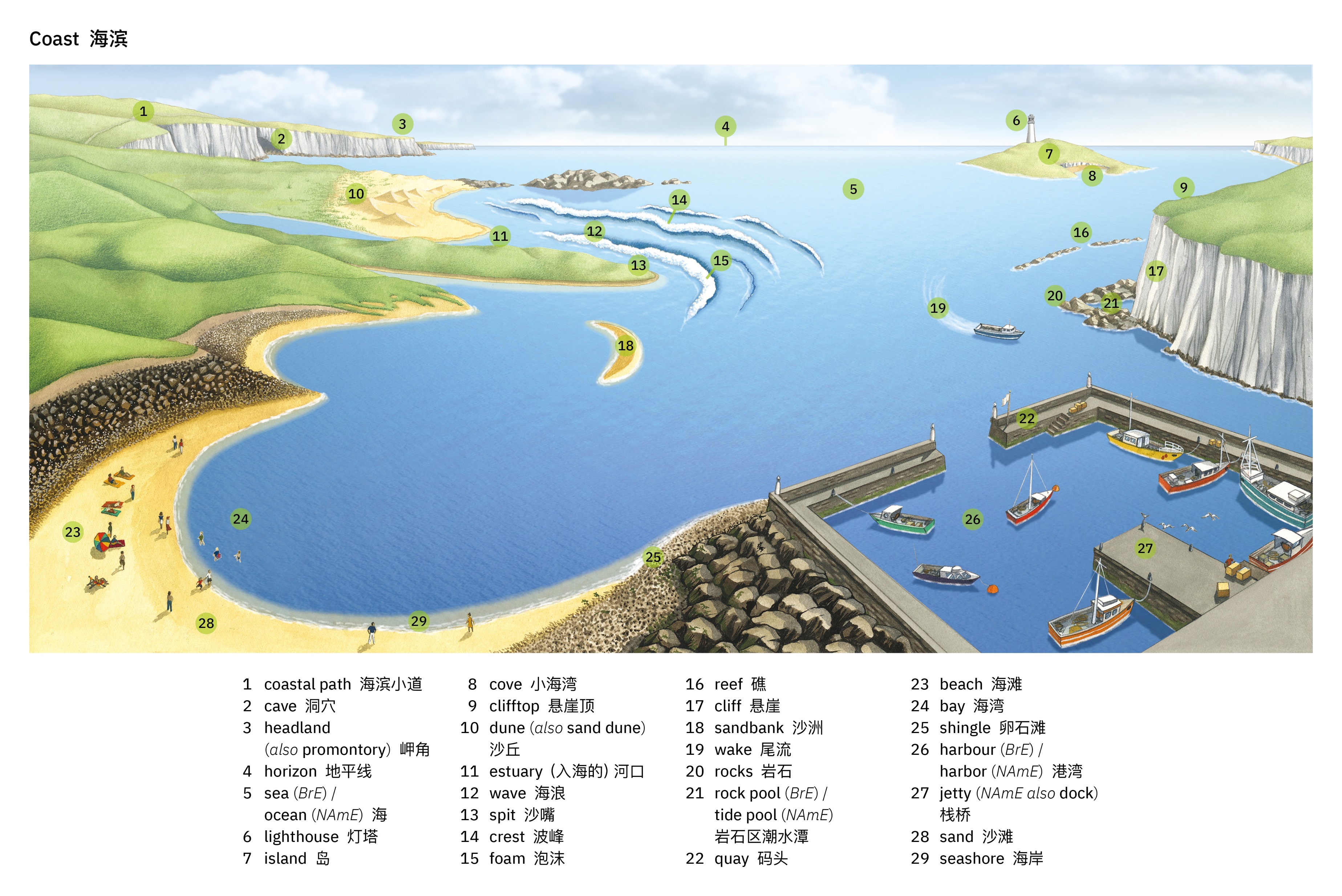
Longman Dictionary of Contemporary English 5++LDOCE 5++har·bour1 British English, harbor American English /ˈhɑːbə $ ˈhɑːrbər/ ●●○ noun [countable] TTWan area of water next to the land where the water is calm, so that ships are safe when they are inside it 港口,港湾,海港 → bay as they sailed into Portsmouth Harbour 当他们驶入朴次茅斯港的时候
Examples from the Corpus
harbour• Large numbers of nuclear-powered submarines are laid up at a harbour near Murmansk.• There are also some interesting old buildings to see around the Shore and at the old-world fishing harbour of Newhaven.• For the Out Skerries comprise a group of three little islands which are conveniently arranged to form a perfect natural harbour.• About 7,000 yachts had been in the harbour for days to get the best view.harbour2 British English, harbor American English verb [transitive] 1 FEEL HAPPY/FRIGHTENED/BORED ETCto keep bad thoughts, fears, or hopes in your mind for a long time 怀有,心存〔不好的想法、恐惧或希望〕 I think he’s harbouring some sort of grudge against me. 我觉得他对我有点怀恨在心。 She began to harbour doubts over the wisdom of their journey. 她开始对他们的旅行是否明智产生了怀疑。2 to contain something, especially something hidden and dangerous 包含;藏有 Sinks and draining boards can harbour germs. 洗涤槽和沥水板可能藏有病菌。3. PROTECTto protect and hide criminals that the police are searching for 窝藏,包庇〔罪犯〕► see thesaurus at protect→ See Verb tableExamples from the Corpus
harbour• Taylor denied harbouring a grudge against his former boss.• Every available stretch of water - be it river, sea or reservoir - is likely to harbour a sailing club.• It is especially good for people with allergies as it doesn't harbour dust.• But as I studied him any aggressive feelings I may have harboured evaporated quickly.• The students harboured hidden resentment and committed deceit.• Between 30 and 50% of people in western countries harbour methanogenic bacteria in their colons.• It appeared isolated, withdrawn, harbouring something which, if revealed, might shock and frighten its neighbours.• I abandoned the garden, which harboured the non-existent toad.From Longman Business Dictionaryharbourhar‧bour /ˈhɑːbəˈhɑːrbər/ British English, harbor American English noun [countable] an area of calm water next to the land, where boats arrive and leaveThe island has a fine modern harbour.Theharbour master (=someone in charge of a harbour) may request the ship owner to remove the vessel.har·bour1 nounharbour2 verbChineseSyllable
to an Business area of Corpus land next the water where
harbour
har‧bour1 
 British English, harbor American English /ˈhɑːbə $ ˈhɑːrbər/ noun [countable]
an area of water next to the land where the water is calm, so that ships are safe when they are inside it ⇨ bay:

as they sailed into Portsmouth Harbour
▪ port noun [uncountable and countable] a place where ships can be loaded and unloaded: a busy port | We’ll have two days ashore while the ship is in port. | The ferry was about to leave port.
▪harbour British English, harbor American English noun [countable] an area of water next to the land which is protected by walls so the water is calm, and is a place where ships can stay when they are not sailing: They sailed into Portsmouth Harbour | Tourist boats leave the harbour at Riva regularly. | the harbour wall
▪dock [uncountable and countable] a place in a port where ships are loaded, unloaded, or repaired: A crowd was waiting at the dock to greet them. | The ship was in dock for repairs.
▪pier a structure that is built over and into the water so that boats can stop next to it or people can walk along it: The yacht was moored at a pier.
▪jetty noun [countable] a wall or platform built out into the water, used for getting on and off boats: a wooden jetty | The house has a private jetty.
▪mooring noun [countable] the place where a ship or boat is fastened to the land or to the bottom of the sea: Tugs towed the boat away from its mooring at White Bay.
▪marina noun [countable] a harbour where people keep boats which are used for pleasure: They are building a new 220-berth marina. | The apartments have a private marina.
harbour2 British English, harbor American English verb [transitive]
1. to keep bad thoughts, fears, or hopes in your mind for a long time:
I think he’s harbouring some sort of grudge against me.
She began to harbour doubts over the wisdom of their journey.
2. to contain something, especially something hidden and dangerous:
Sinks and draining boards can harbour germs.
3. to protect and hide criminals that the police are searching for
▪ protect to keep someone or something safe from harm, damage, or illness: Don’t worry, I’ll protect you. | The government wants to protect the environment. | Eating healthily helps to protect against many diseases.
▪give/offer/provide protection to protect someone from something harmful: Wearing a hat offers some protection from the sun. | The drug can give protection against cancer. | The law provides no protection.
▪guard to protect a person, place, or object by staying near them and watching them: Police officers guarded the entrance to the building. | He is guarded by armed men.
▪save to protect someone or something when they are in danger of being harmed or destroyed: Local people are fighting to save the theatre from demolition. | Emergency aid could save millions of people who are threatened with starvation.
▪preserve to keep something, especially buildings or the environment, from being harmed, destroyed, or changed too much: The organization works to preserve forests. | There is little money for preserving historic buildings.
▪safeguard to protect something important, such as people’s rights, interests, jobs, health etc: The deal will safeguard 200 jobs at the factory. | Laws should do more to safeguard the rights of victims.
▪shield to put something in front of something else to protect it. Also used to talk about protecting people from unpleasant situations: He lifted his hand to shield his eyes from the light. | They thought the public should be shielded from the truth.
▪shelter to provide a place where someone or something is protected from the weather or from danger: The village is sheltered by a belt of trees. | His family had sheltered Jews during the war.
▪harbour British English, harbor American English to help and protect someone who has done something illegal, and prevent the police from finding them: He is accused of harbouring suspected terrorists.
| I |
British English, harbor American English /ˈhɑːbə $ ˈhɑːrbər/ noun [countable]an area of water next to the land where the water is calm, so that ships are safe when they are inside it ⇨ bay:
| THESAURUS |
▪
▪
▪
▪
▪
▪
| II |
British English, harbor American English verb [transitive]1. to keep bad thoughts, fears, or hopes in your mind for a long time:
2. to contain something, especially something hidden and dangerous:
3. to protect and hide criminals that the police are searching for
| THESAURUS |
▪
▪
▪
▪
▪
▪
▪
▪
especially
especially