hare
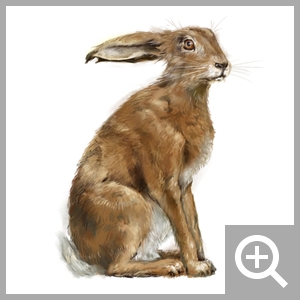
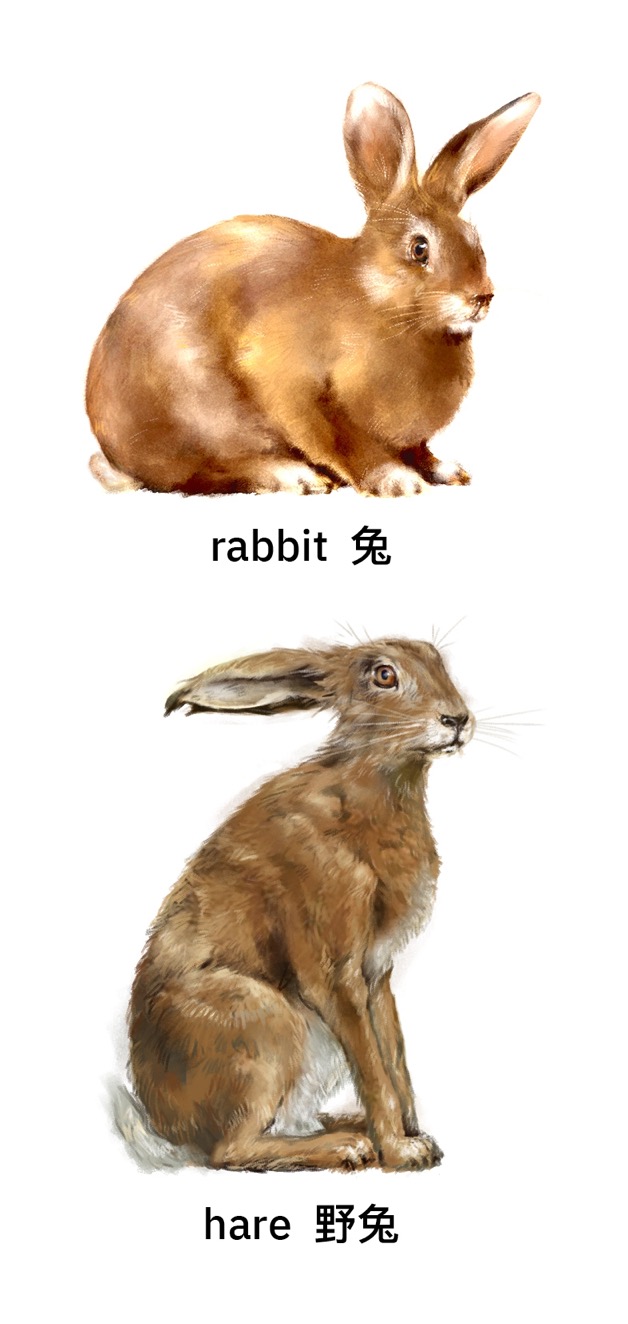
Longman Dictionary of Contemporary English 5++LDOCE 5++hare1 /heə $ her/ noun (plural hare or hares) [countable] HBAan animal like a rabbit but larger, which can run very quickly 野兔
Examples from the Corpus
hare• The only terminal casualty of this extraordinary occurrence, apart from the aeroplane, was a hare which it struck on landing.• But hare and even the odd gazelle were available locally.• As her scythe moved mechanically through the bean field, a sandy-colored hare was startled out of its hiding place.• Then he took off in fast flight, and l saw him in vigorous chase after a snowshoe hare.• And the rich, savoury smell of the hare drifted down to meet her, turning her stomach.• Wild hare, unfortunately, is quite difficult to find.• Younger hares take well to marinating and roasting rare; older ones need to be braised or stewed.hare2 verb [intransitive always + adverb/preposition] British English informalRUN to run or go very fast 飞跑,飞奔hare off He hared off down the road. 他沿着马路飞快地跑掉了。→ See Verb tableExamples from the Corpus
hare• He might be strong in his own opinions but he did not go haring off on his own.• They didn't come haring towards them as if the mere sight of them was the best thing that had happened all day.• We can't just go haring off into the city like that.• Why the devil do you think I came haring over here?• Small's nephew stood behind the firing squad and trained a searchlight back and forth as we hared across the fields.• It still needed a fine catch from Crowe, who hared back to wide mid-on and sprawled towards the boundary.• Then he scrambled to his feet and hared off between the trees.Origin hare Old English harahare1 nounhare2 verbChinese
an a Corpus like larger, rabbit which animal but
hare
hare1 /heə $ her/ 
 noun (plural hare or hares) [countable]
hare2 verb [intransitive always + adverb/preposition]
British English informal to run or go very fast
hare off

He hared off down the road.
| I |
noun (plural hare or hares) [countable] Language: Old English
Origin: hara
an animal like a rabbit but larger, which can run very quicklyOrigin: hara
| II |
verb [intransitive always + adverb/preposition]British English informal to run or go very fast
hare off