herb
Longman Dictionary of Contemporary English 5++LDOCE 5++herb /hɜːb $ ɜːrb, hɜːrb/ ●●○ noun [countable] HBPDFa small plant that is used to improve the taste of food, or to make medicine 〔用于调味〕香草;药草 → spice Sprinkle the dish with chopped fresh herbs. 在菜肴上撒些切碎的新鲜香草。
Examples from the Corpus
herb• This is an astonishingly fine wine with great concentration and wonderful flavors of black cherry, chocolate, black raspberry and herbs.• We also like to use large bunches of basil and other fresh herbs, which impart a unique flavor of their own.• You should see some impressive herb robert growing on the back between the river and road.• The Physic Garden is planted with examples of herbs used in Medieval times for medicinal purposes.• Many people think of herbs primarily as something you; find in a small tin rather than in the backyard garden.• Oregano is a pungent herb, overpowering if used alone.• This area ranges from almost full sun, beyond the herb bed, to deep shade adjoining the house.• The rushes on the floor were clean and sprinkled with herbs.Origin herb (1200-1300) Old French erbe, from Latin herba “grass, herb”herb nounChinese
the Corpus is of improve that a taste plant small used to
herb
herb /hɜːb $ ɜːrb, hɜːrb/
 noun [countable]

Sprinkle the dish with chopped fresh herbs.
▪ plant a living thing that has leaves and roots and grows in earth, especially one that is smaller than a tree: Don’t forget to water the plants. | Plants grow towards the sun. | Botanists examined plant species from around the world.
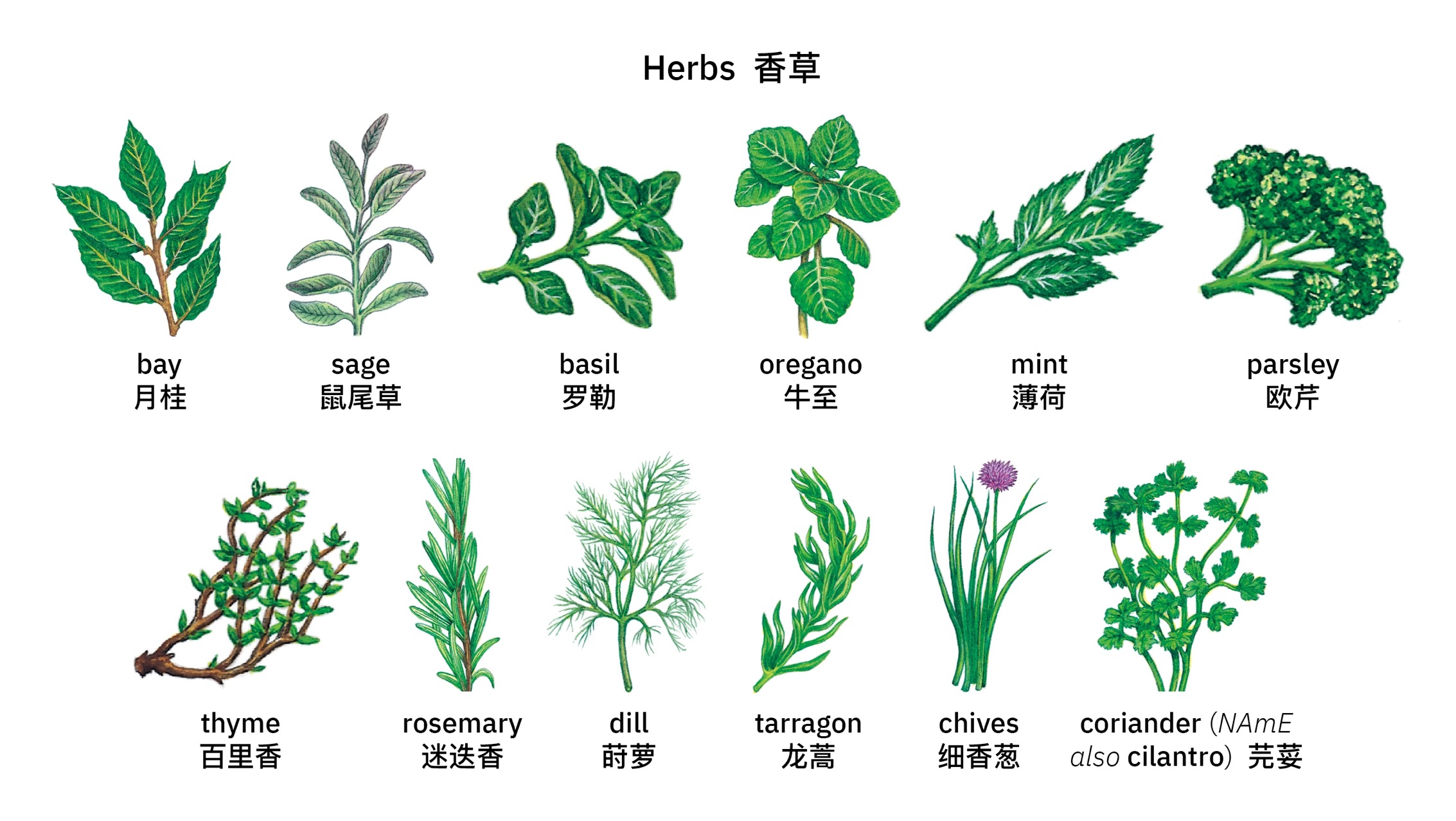
▪herb a small plant that is used to improve the taste of food, or to make medicine: Sprinkle the dish with chopped fresh herbs. | medicinal herbs (=used as medicine) | The shop sells an interesting range of herbs and spices.
▪weed a wild plant growing where it is not wanted that prevents crops or garden flowers from growing properly: She was pulling up weeds in her garden. | Herbicides can be used to prevent and control weeds.
▪bulb a root shaped like a ball that grows into a flower or plant: She planted hundreds of daffodil bulbs.
▪shrub a small bush with several woody stems: flowering shrubs | Rosemary is an evergreen shrub.
herb /hɜːb $ ɜːrb, hɜːrb/
noun [countable] Date: 1200-1300
Language: Old French
Origin: erbe, from Latin herba 'grass, herb'
a small plant that is used to improve the taste of food, or to make medicine ⇨ spice:Language: Old French
Origin: erbe, from Latin herba 'grass, herb'
| THESAURUS |
▪
▪
▪
▪
Ways of talking about men and women 表示男女的说法
When you are writing or speaking English it is important to use language that includes both men and women equally. Some people may be very offended if you do not. 说写英语时,重要的是用词要把男女都包括在内,否则可能会冒犯某些人。
The human race 人类
Man andmankind have traditionally been used to mean 'all men and women'. Many people now prefer to usehumanity ,the human race ,human beings orpeople .* man 和 mankind 传统上用以指所有男性和女性,不过,现在许多人喜欢用 humanity、the human race、human beings 或 people。
Jobs 职业
The suffix -ess in names of occupations such asactress ,hostess andwaitress shows that the person doing the job is a woman. Many people now avoid these. Instead you can useactor orhost (althoughactress andhostess are still very common), or a neutral word, such asserver forwaiter andwaitress .后缀 -ess 在职业的名称如 actress、hostess 和 waitress 中表明从事此职业的是女性。目前,许多人避免用这些词。取而代之的是 actor 或 host(尽管 actress 和 hostess 仍然很常见)或用中性词如 server 取代 waiter 和 waitress。 Neutral words like assistant ,worker ,person orofficer are now often used instead of-man or-woman in the names of jobs. For example, you can usepolice officer instead ofpoliceman orpolicewoman , andspokesperson instead ofspokesman orspokeswoman . Neutral words are very common in newspapers, on television and radio and in official writing, in bothBrE NAmE 现在职业名称常用中性词如 assistant、worker、person 或 officer 取代 -man 或 -woman。例如可用 police officer 代替 policeman 或 policewoman,用 spokesperson 代替 spokesman 或 spokeswoman。在报刊、电视、广播和公文中,英式英语和美式英语都常用中性词。 When talking about jobs that are traditionally done by the other sex, some people say: a male secretary /nurse /model (NOTman ) ora woman /female doctor /barrister /driver . However this is now not usually used unless you need to emphasize which sex the person is, or it is still unusual for the job to be done by a man/woman.谈及传统上由另一性别干的工作时,有人用 male secretary/nurse/model(不用 man)或 woman/female doctor/barrister/driver 表示。不过现在这种用法不常见,除非要强调此人的性别,或由某性别干此工作仍然少见 :◆ My daughter prefers to see a woman doctor. 我的女儿喜欢让女医生看病。 ◆ They have a male nanny for their kids. 他们有个男保姆照料孩子。 ◆ a female racing driver 女赛车手
Pronouns 代词
He used to be considered to cover both men and women.* he 过去被认为既指男性也指女性 :◆ Everyone needs to feel he is loved. 人人都需要有被爱的感觉。 This is not now acceptable. Instead, after everybody ,everyone ,anybody ,anyone ,somebody ,someone , etc. one of the plural pronounsthey ,them , andtheir is often used.现在此用法不获认同。取而代之的是在 everybody、everyone、anybody、anyone、somebody、someone 等之后常用复数代词 they、them 和 their :◆ Does everybody know what they want? 人人都知道自己需要什么吗? ◆ Somebody's left their coat here. 有人把外衣落在这儿了。 ◆ I hope nobody's forgotten to bring their passport with them. 希望没人忘了随身带上护照。 Some people prefer to use he or she ,his or her , orhim or her in speech and writing.有人在口语和书面语中喜欢用 he or she、his or her 或 him or her :◆ Everyone knows what's best for him- or herself. 人人都知道对自己来说什么是最好的。 He/she or(s)he can also be used in writing.* he/she 或 (s)he 亦可用于书面语中 :◆ If in doubt, ask your doctor. He/she can give you more information. 如有疑问请向你的医生咨询,他/她会给你更多的信息。 (You may find that some writers just use 'she'.) 有些人只用 she。 :These uses can seem awkward when they are used a lot. It is better to try to change the sentence, using a plural noun. 这种说法用得太多可能显得别扭。最好尽量改动句子,用复数名词。 :Instead of saying 避免说 :◆ A baby cries when he or she is tired you can say 可以说 :◆ Babies cry when they are tired. 婴儿疲倦时会哭。