husky
Longman Dictionary of Contemporary English 5++LDOCE 5++hus·ky1 /ˈhʌski/ adjective 1 ROUGH VOICEa husky voice is deep, quiet, and attractive 〔嗓音〕低沉沙哑的 ‘Come quickly, ’ she said in a husky whisper. “快来。”她用沙哑的嗓音低声说道。2. especially American EnglishSTRONG PERSON a man or boy who is husky is big and strong 〔男子〕高大健壮的 —huskily adverb HBATTBa dog with thick hair used in Canada and Alaska to pull sledges over the snow 爱斯基摩犬
Examples from the Corpus
husky• She was sure her gown would clash with the costumes of the chorus; she was getting a little husky.• It shows some wear these days, a shade huskier, a few notes short, even an occasional crack or two.• The boy presented with shortness of breath and husky cough.• Has the husky engine of real estate that Cotton watched drive the county out of multiple recessions run out of gas?• The words came on a husky out-breath.• Caron Wheeler's rich, husky vocal is perfect for the song's mellow soulfulness.• He has the assertive, husky voice and the confident, forthright manner of an athlete.• She heard a husky voice call her name.• His voice dropped to a husky whisper.• Stephen put his arms around her and his voice became a soft husky whisper.• Despite the heavy consumption of intoxicants, no one's voice ever rose above a husky whisper.husky2 noun (plural huskies) [countable] HBATTBa dog with thick hair used in Canada and Alaska to pull sledges over the snow 爱斯基摩犬Examples from the Corpus
husky• Musher wannabes can drive their own team of Siberian huskies.• And you know with huskies, if one of them drops dead, the rest of them eat him.Origin husky1 1. (1700-1800) Probably from husk “to have a dry cough” ((16-19 centuries)) (from the sound). 2. (1800-1900) Probably from → HUSK1; because corn-husks are hard and strong husky2 (1800-1900) Probably from Eskimohus·ky1 adjectivehusky2 nounChineseSyllable
deep, voice is husky quiet, and a Corpus
husky
hus‧ky1 /ˈhʌski/ 
 adjective
Origin: Probably from husk 'to have a dry cough' (16-19 centuries) (from the sound).1. a husky voice is deep, quiet, and attractive:

‘Come quickly,’ she said in a husky whisper.
2. especially American English a man or boy who is husky is big and strong
—huskily adverb
■ voices/sounds that are not high
▪low a low voice or sound is not high on the scale of musical sounds: I can’t sing the low notes. | He’s got quite a low singing voice. | Boys’ voices usually become much lower as they get older.
▪deep a deep voice or sound is low, strong, and pleasant: He has a lovely deep voice. | The engine has a wonderfully deep sound to it, like it’s ready to race.
▪husky a husky voice is deep, quiet, and rough-sounding, especially in a way that is attractive: Monroe sang 'Happy Birthday, Mr President’ in a slow husky voice. | His voice dropped to a husky whisper.
▪gravelly a gravelly voice is very low and rough sounding: The singer is famous for his gravelly voice.
husky2 noun (plural huskies) [countable]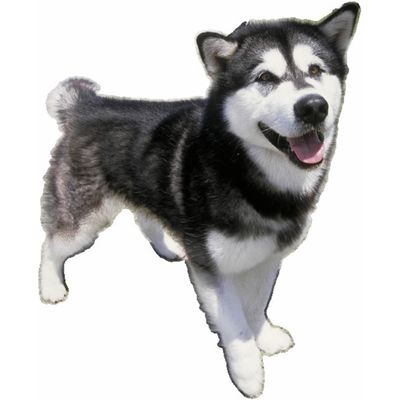
a dog with thick hair used in Canada and Alaska to pull sledges over the snow
| I |
adjective Sense 1
Date: 1700-1800Origin: Probably from husk 'to have a dry cough' (16-19 centuries) (from the sound).
2. especially American English a man or boy who is husky is big and strong
—huskily adverb
| THESAURUS |
▪
▪
▪
▪
| II |
noun (plural huskies) [countable] Date: 1800-1900
Origin: Probably from Eskimo
Origin: Probably from Eskimo
a dog with thick hair used in Canada and Alaska to pull sledges over the snow