intestine
Longman Dictionary of Contemporary English 5++LDOCE 5++in·tes·tine /ɪnˈtestɪn/ noun [countable]  HBthe long tube in your body through which food passes after it leaves your stomach 肠 SYN gut —intestinal adjective → large intestine, small intestine
HBthe long tube in your body through which food passes after it leaves your stomach 肠 SYN gut —intestinal adjective → large intestine, small intestineExamples from the Corpus
intestine• The village paths soon became covered with a mass of bodies, brains, blood and intestines.• Montgomery etal isolated cells from 18 day fetal rat intestine by trypsin dissociation.• In agreement with our findings, they showed that the rat intestine secreted fluid on day 5 after parasite administration.• Each day, 7-10 litres of water enter the small intestine.• The degree of amyloid deposition, however, was greatest in the small intestine.• So far two of 10 patients with a diagnosis of Crohn's disease have already developed recurrence in the small intestine.• As the wall of the small intestine comes into view, you notice that it looks furry.• The ultrastructure of the intestine was examined in seven patients.Origin intestine (1400-1500) French intestin, from Latin intestinum, from intus “inside”in·tes·tine nounChineseSyllable
the which long your after tube in food Corpus through passes body
intestine
in‧tes‧tine /ɪnˈtestən, ɪnˈtestɪn/
 noun [countable]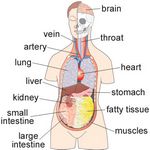
the long tube in your body through which food passes after it leaves your stomach
SYN gut
—intestinal adjective
⇨ large intestine, small intestine
in‧tes‧tine /ɪnˈtestən, ɪnˈtestɪn/
noun [countable] Date: 1400-1500
Language: French
Origin: intestin, from Latin intestinum, from intus 'inside'
Language: French
Origin: intestin, from Latin intestinum, from intus 'inside'
the long tube in your body through which food passes after it leaves your stomach
SYN gut
—intestinal adjective
⇨ large intestine, small intestine