jib
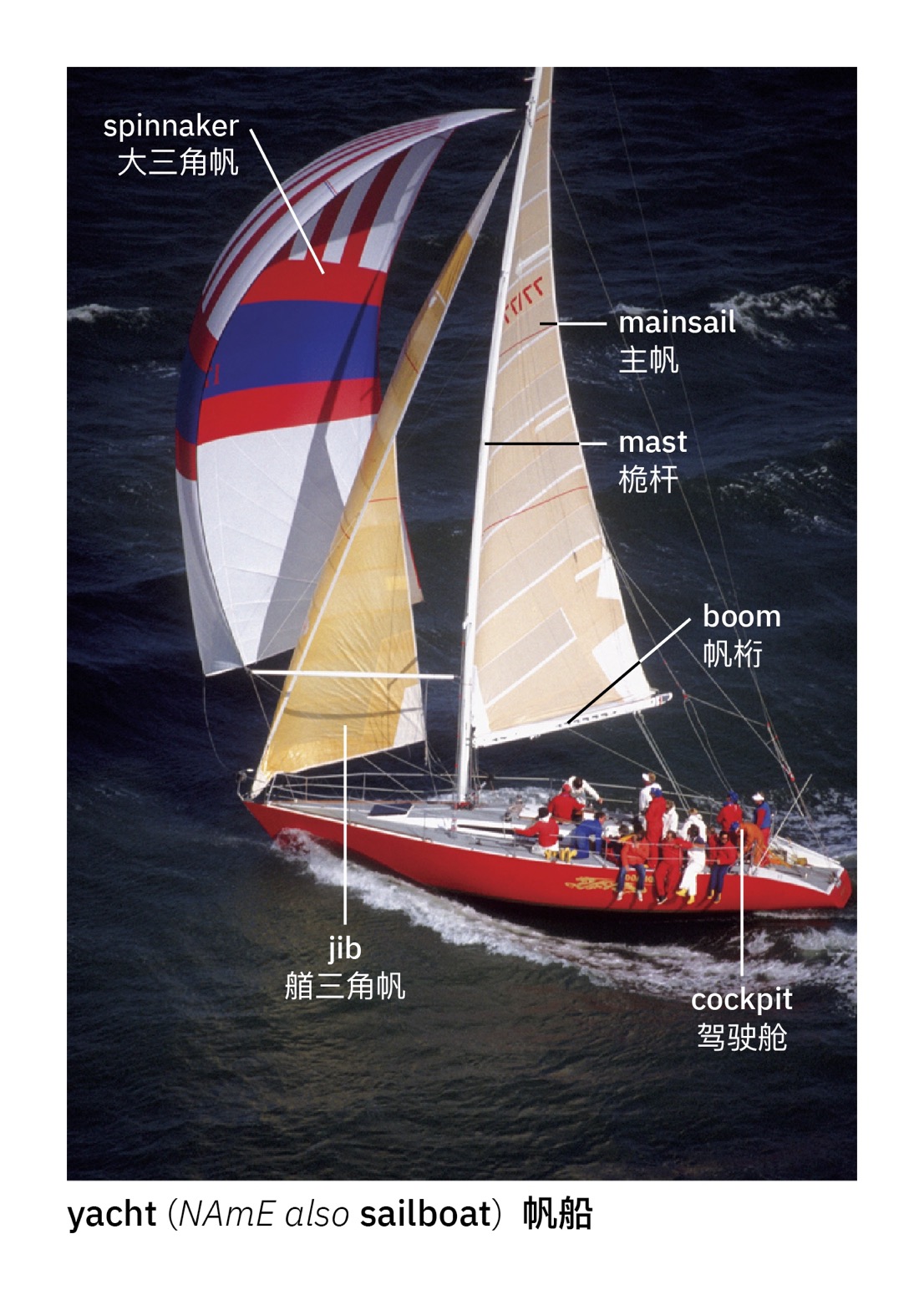
Longman Dictionary of Contemporary English 5++LDOCE 5++jib1 /dʒɪb/ noun [countable] 1. TTWa small sail in front of the large sail on a boat 艏三角帆 → mainsail2. TBCTthe long part of a crane 〔起重机的〕悬臂
Examples from the Corpus
jib• There are two wheels of 16-foot diameter, and the 18-foot jib could swing through 180°.• But possibly because he had noted how Conner had lost a protest in mirror-image circumstances, he dropped his jib.• Tethered by a foot, their sole giraffe manipulates its jib like an Anglepoise, awkwardly precise.• Trent gathered it and wrapped it with ties to the boom before going forward to raise the storm jib.• The yellow genoa sped up the forestay, Trent switching sheets as the jib came down.jib2 verb (jibbed, jibbing) [intransitive] DSH especially British English to be unwilling to do or accept something 不肯做;不愿接受jib at He jibbed at the price I asked for. 他不肯接受我的要价。→ See Verb tableExamples from the Corpus
jib• It was the soul she jibbed at.• The flask tea alone Leon jibbed at.Origin jib 1. (1600-1700) Origin unknown. 2. (1700-1800) Probably from gibbeta small of the front in Corpus sail
jib
jib1 /dʒɪb/ 
 noun [countable]
Origin: Origin unknown.
Origin: Probably from gibbet1. a small sail in front of the large sail on a boat ⇨ mainsail
2. the long part of a crane
jib2 verb (past tense and past participle jibbed, present participle jibbing) [intransitive]
especially British English to be unwilling to do or accept something
jib at

He jibbed at the price I asked for.
| I |
noun [countable] Sense 1
Date: 1600-1700Origin: Origin unknown.
Sense 2
Date: 1700-1800Origin: Probably from gibbet
2. the long part of a crane
| II |
verb (past tense and past participle jibbed, present participle jibbing) [intransitive]especially British English to be unwilling to do or accept something
jib at