kangaroo
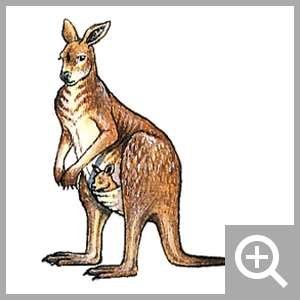
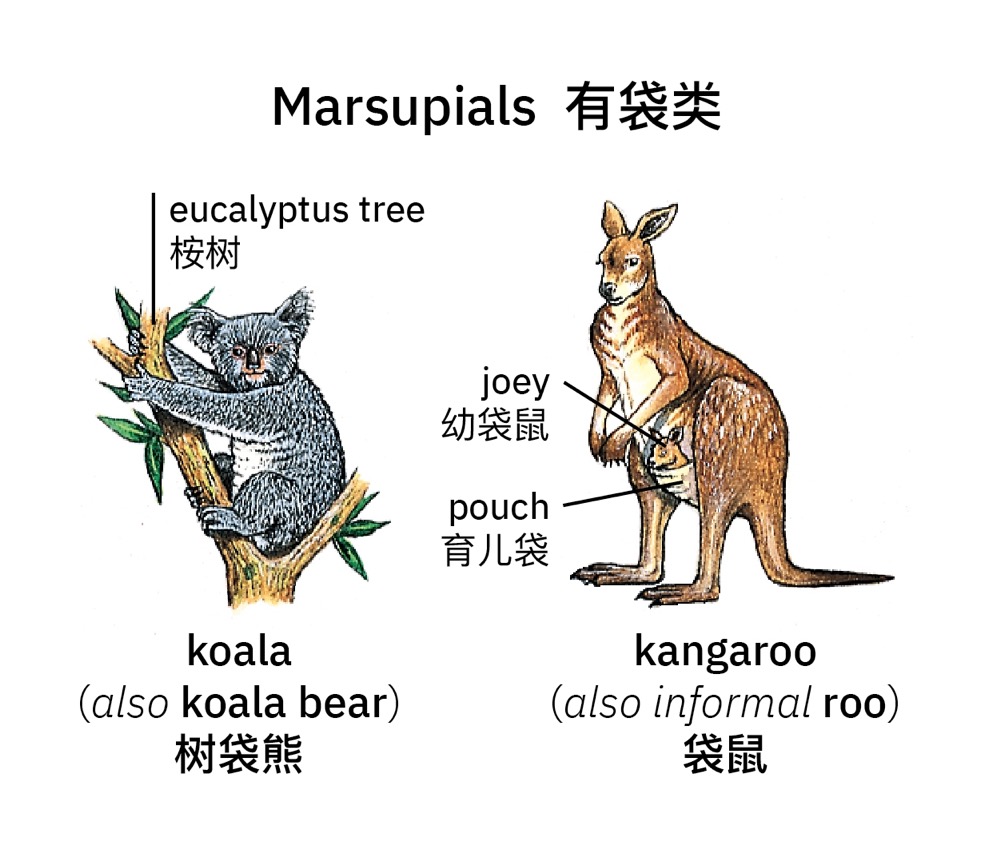
Longman Dictionary of Contemporary English 5++LDOCE 5++kan·ga·roo /ˌkæŋɡəˈruː◂/ noun (plural kangaroos) [countable]  HBAan Australian animal that moves by jumping and carries its babies in a pouch (=a special pocket of skin) on its stomach 袋鼠 → marsupial
HBAan Australian animal that moves by jumping and carries its babies in a pouch (=a special pocket of skin) on its stomach 袋鼠 → marsupialExamples from the Corpus
kangaroo• Billy's short legs kept getting tangled in the heather, so he bounced along like a kangaroo through the springy tufts.• But only the lucky and the sharp-eyed will catch sight of a kangaroo.• Wooden horses and kangaroos and chickens went round and round also, a few of them with children on their backs.• Out of Canberra you can see wombats, possums and kangaroos at dusk if you leave the main road.• For jarrah, wheat and giant kangaroos the conflict is obvious.• At the Desert Garden Hotel, the buffet line is digging into kangaroo stew.• She raves over the low cholesterol content of kangaroo and it's distinctive, sweet taste.• For Gordon Griggs, professor of zoology at Queensland University, the kangaroo issue has become a cause.Origin kangaroo (1700-1800) From an Australian Aboriginal languagekan·ga·roo nounChineseSyllable
an Corpus moves jumping animal that by Australian
kangaroo
kan‧ga‧roo /ˌkæŋɡəˈruː◂/
 noun (plural kangaroos) [countable]
an Australian animal that moves by jumping and carries its babies in a pouch (=a special pocket of skin) on its stomach ⇨ marsupial
kan‧ga‧roo /ˌkæŋɡəˈruː◂/
noun (plural kangaroos) [countable] Date: 1700-1800
Origin: From an Australian Aboriginal language
Origin: From an Australian Aboriginal language
an Australian animal that moves by jumping and carries its babies in a pouch (=a special pocket of skin) on its stomach ⇨ marsupial