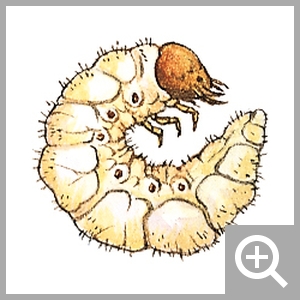
larva
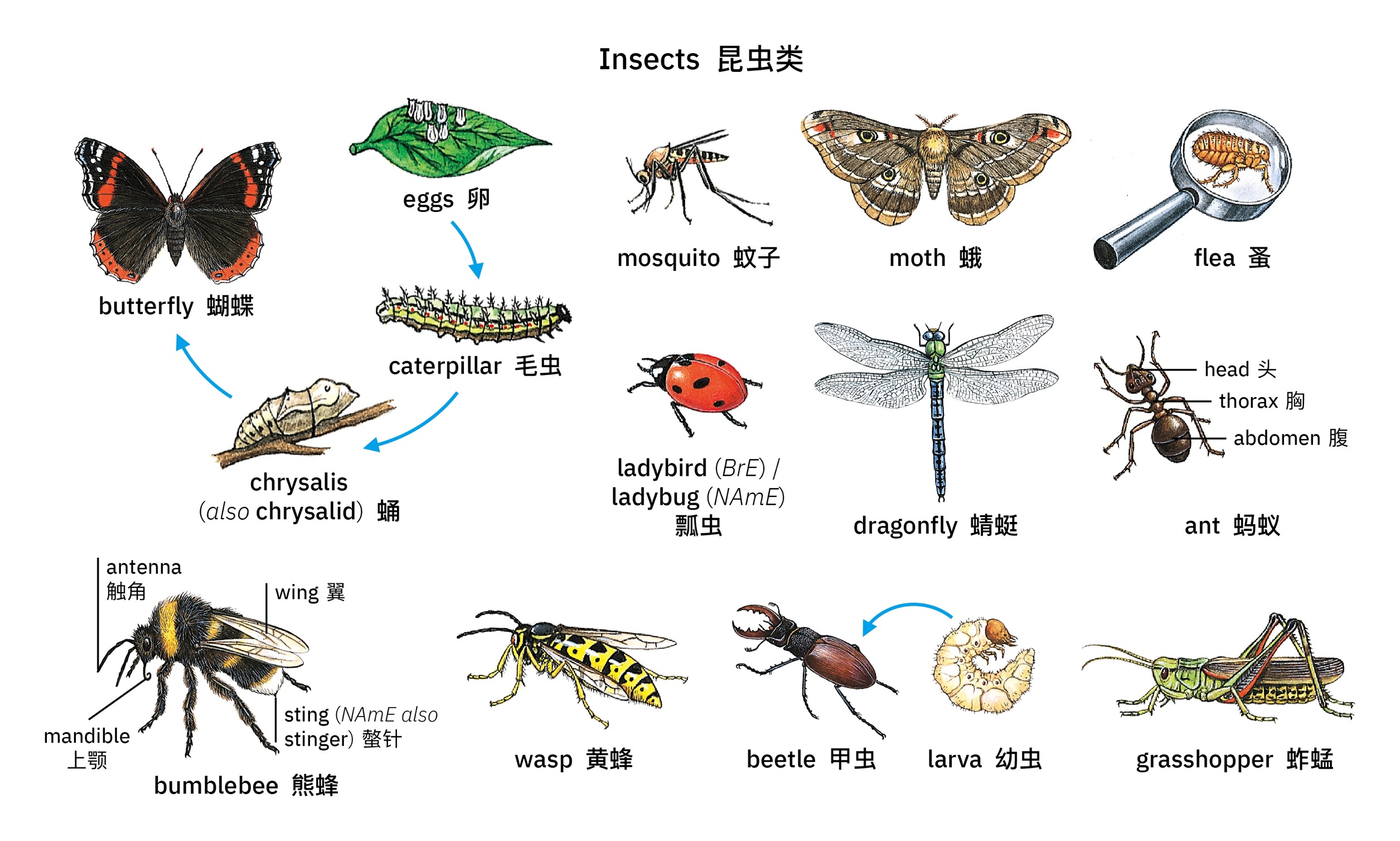
Longman Dictionary of Contemporary English 5++LDOCE 5++lar·va /ˈlɑːvə $ ˈlɑːrvə/ noun (plural larvae /-viː/) [countable] HBIa young insect with a soft tube-shaped body, which will later become an insect with wings 〔昆虫的〕幼虫,幼体 SYN grub, → pupa —larval adjective →5 see picture at 见图 metamorphosis
Examples from the Corpus
larva• There will be larvae too, but these are small and go through the sieve.• The sea squirt larva is not the only filter-feeder with such a significant rod in its back.• There are three stages - larva, nymph and adult - each of which quite often feeds off a different host.• At higher temperatures, development is faster and the larvae are hyperactive, thus depleting their lipid reserves.• Escamoles are the larva and pupa stage of the red ant.• This, at least, is some suggestion of a backbone, but the larva does not keep it for very long.• Growth is rapid, on a diet of tiny larvae, worms and relatives.• The eggs sit all winter, but don't turn to larvae until there's a rain.Origin larva (1600-1700) Latin “ghost, mask”lar·va nounChineseSyllable
body, a a soft tube-shaped young with insect Corpus
See ldoce4302jpg for more
larva
lar‧va /ˈlɑːvə $ ˈlɑːrvə/
 noun (plural larvae /-viː/) [countable]
SYN grub ⇨ pupa
—larval adjective
lar‧va /ˈlɑːvə $ ˈlɑːrvə/
noun (plural larvae /-viː/) [countable] Date: 1600-1700
Language: Latin
Origin: 'ghost, mask'
a young insect with a soft tube-shaped body, which will later become an insect with wings Language: Latin
Origin: 'ghost, mask'
SYN grub ⇨ pupa
—larval adjective