lute
Longman Dictionary of Contemporary English 5++LDOCE 5++lute /luːt/ noun  [countable]APM a musical instrument like a guitar with a round body, played with the fingers or a plectrum (=small piece of plastic, metal etc), especially in the past 琉特琴〔旧时一种类似吉他的拨弦乐器,琴身为圆形〕 →5 see picture at 见图 stringed instrument —lutenist /ˈluːtənɪst/ noun [countable]
[countable]APM a musical instrument like a guitar with a round body, played with the fingers or a plectrum (=small piece of plastic, metal etc), especially in the past 琉特琴〔旧时一种类似吉他的拨弦乐器,琴身为圆形〕 →5 see picture at 见图 stringed instrument —lutenist /ˈluːtənɪst/ noun [countable]Examples from the Corpus
lute• She was aware of her body, realising that it was taut as a lute string with anticipation.• The allure of pipes, of a lute, of a lyre, a flute.• Here too he started to write hymns which he would sing to his own accompaniment on a lute.• The moon went behind a cloud, and Guy heard Blondel dear his throat and touch the strings of his lute.• He flew into a rage with him and brained him with his lute.• The second lute song, Essex's own poem, does not stand out unduly.• The classical mandolin -- as opposed to its slightly different bluegrass cousin -- looks like a stunted lute.• The lute also provided the music for the game of musical chairs they played, with cushions laid in a row.Origin lute (1200-1300) Old French lut, from Old Provençal laut, from Arabic al-'ud “the wood”lute nounChinese
musical like with Corpus instrument a a guitar
See ldoce4429jpg for more
lute
lute /luːt/
 noun
noun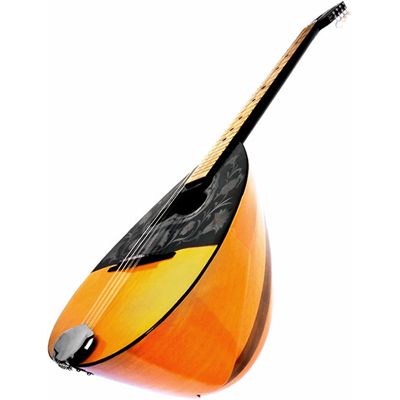
[countable] a musical instrument like a guitar with a round body, played with the fingers or a plectrum (=small piece of plastic, metal etc), especially in the past
—lutenist /ˈluːtənəst, ˈluːtənɪst/ noun [countable]
lute /luːt/
noun Date: 1200-1300
Language: Old French
Origin: lut, from Old Provençal laut, from Arabic al-'ud 'the wood'
Language: Old French
Origin: lut, from Old Provençal laut, from Arabic al-'ud 'the wood'
[countable] a musical instrument like a guitar with a round body, played with the fingers or a plectrum (=small piece of plastic, metal etc), especially in the past
—lutenist /ˈluːtənəst, ˈluːtənɪst/ noun [countable]