maple
Longman Dictionary of Contemporary English 5++LDOCE 5++ma·ple /ˈmeɪpəl/ ●○○ noun  1. (also maple tree) [countable]HBP a tree which grows mainly in northern countries such as Canada. Its leaves have five points and turn red or gold in autumn. 〔生长在加拿大等北方国家的〕槭树,枫树2. [uncountable]TI the wood from a maple 槭木,枫木
1. (also maple tree) [countable]HBP a tree which grows mainly in northern countries such as Canada. Its leaves have five points and turn red or gold in autumn. 〔生长在加拿大等北方国家的〕槭树,枫树2. [uncountable]TI the wood from a maple 槭木,枫木Examples from the Corpus
maple• Perhaps a maple forest is but a grand organism composed of lesser organisms.• These barn sills enclose thick white birch, ash, and maple trees.• Most of northern Calabria is mountainous and thickly wooded with pine, silver fir and maple.• The practical problem, Marvin told me, was that he is no longer able to improve his maple tree stands.• To begin with, the sugar maple.• I walked through hardwood forest of very thick sugar maples and yellow birches.• Add 1 / 4 tablespoon of butter and 1 teaspoon maple syrup to each pumpkin.Origin maple Old English mapulma·ple nounChineseSyllable
mainly a grows tree countries northern Corpus in such which
maple
ma‧ple /ˈmeɪpəl/
 noun
noun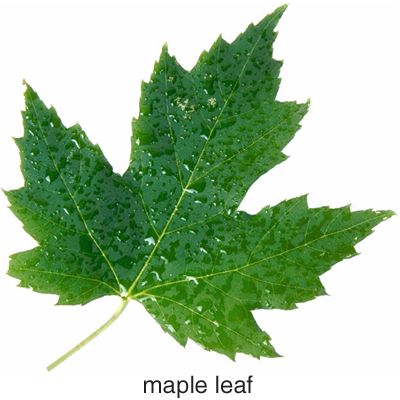
1. (also maple tree) [countable] a tree which grows mainly in northern countries such as Canada. Its leaves have five points and turn red or gold in autumn.
2. [uncountable] the wood from a maple
ma‧ple /ˈmeɪpəl/
noun Language: Old English
Origin: mapul
Origin: mapul
1. (also maple tree) [countable] a tree which grows mainly in northern countries such as Canada. Its leaves have five points and turn red or gold in autumn.
2. [uncountable] the wood from a maple