mask
Longman Dictionary of Contemporary English 5++LDOCE 5++ldoce_217_emask1 /mɑːsk $ mæsk/ ●●○ noun [countable]  1 HIDE/MAKE IT HARD TO FIND OR SEEPROTECTsomething that covers all or part of your face, to protect or to hide it 面具;面罩;口罩 a surgical face mask 外科手术口罩 He was attacked and robbed by two people wearing masks. 他被两个蒙面人袭击并抢劫。2
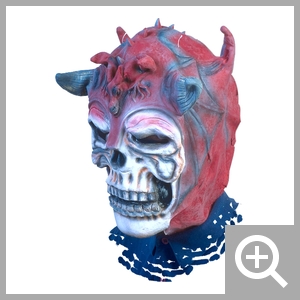
  APDLsomething that covers your face, and has another face painted on it, which is used for ceremonies or special occasions 假面具,假面 a Halloween mask 万圣节面具3 [usually singular]HIDE/NOT SHOW an expression or way of behaving that hides your real emotions or character 伪装;掩饰 SYN front Her sarcasm is a mask for her insecurity. 她讽刺挖苦是为了掩饰她的不安全感。4 a substance that you put on your face and leave there for a short time to clean the skin or make it softer 面膜 SYN face pack a facial mask 面膜 → death mask, gas mask
1 HIDE/MAKE IT HARD TO FIND OR SEEPROTECTsomething that covers all or part of your face, to protect or to hide it 面具;面罩;口罩 a surgical face mask 外科手术口罩 He was attacked and robbed by two people wearing masks. 他被两个蒙面人袭击并抢劫。2 APDLsomething that covers your face, and has another face painted on it, which is used for ceremonies or special occasions 假面具,假面 a Halloween mask 万圣节面具3 [usually singular]HIDE/NOT SHOW an expression or way of behaving that hides your real emotions or character 伪装;掩饰 SYN front Her sarcasm is a mask for her insecurity. 她讽刺挖苦是为了掩饰她的不安全感。4 a substance that you put on your face and leave there for a short time to clean the skin or make it softer 面膜 SYN face pack a facial mask 面膜 → death mask, gas maskExamples from the Corpus
mask• His face was a mask, friendly, but in an impersonal way.• You will need to think carefully about modifiers for wearing a mask.• At the Spinning Wheel Puppets exhibit, children can create masks and puppets.• In Japanese Kabuki theater, the actors wear special masks.• I put my hand over my nose and mouth like a surgical mask just in case I inhaled any of Senga.• Workers in surgical masks are running a hydraulic compressor and tractor-trailer drivers are warming up their big rigs.• Keep the gondola, the mask too.• But can the child transcend the blackness and wear the white mask with pride?wearing masks• Some members said it degraded the chamber to allow outlaws wearing masks to address it.mask2 verb [transitive] 1 NOTICEif a smell, taste, sound etc is masked by a stronger one, it cannot be noticed because of the stronger one 盖住〔气味、味道、声音等〕 Liz turned on a radio to mask the noise. 利兹打开收音机来盖过噪音。 Air-fresheners mask bad smells instead of removing them. 空气清新器只是掩盖住臭味,而不是除掉臭味。► see thesaurus at hide2 HIDE/NOT SHOWto hide your feelings or the truth about a situation 掩饰,隐瞒,掩盖 Men often mask their true feelings with humour. 男人常常用幽默来掩饰他们真实的情感。3 HIDE/MAKE IT HARD TO FIND OR SEEto cover or hide something so that it cannot be clearly seen 遮盖,遮住 The new accommodation block has all but masked the original building. 新的宿舍楼几乎把原来的大楼挡住了。→ See Verb tableExamples from the Corpus
mask• His public image masked a history of divorce and family problems.• All of this mumbo-jumbo masks a large vacuum of uncertainty.• It occurred to her that her inability to contemplate changing her teaching methods might mask an actual inability to change them.• The wall can be cleaned of graffiti and masked by vegetation.• Quiet reaction in camps masks desperation of boat people.• Some may mask instead of eliminate the odor, and others are not safe for use around food.• To deny our depression, to mask it, or to try to escape it for ever leads to misery.• Throughout history, herbs and spices have masked odors and unpleasant flavors.• It reflects the inviolability of family life that in our society helps to mask the darker side of caring and dependency.• And he thinks the gloss that surrounds some 4AD groups is only there to mask the lack of real songs.• Small children find it hard to mask their emotions.Origin mask1 (1500-1600) French masque, from Old Italian mascheramask1 nounmask2 verbChinese
face, or your Corpus all that of something part covers
mask
mask1 /mɑːsk $ mæsk/ 
 noun [countable]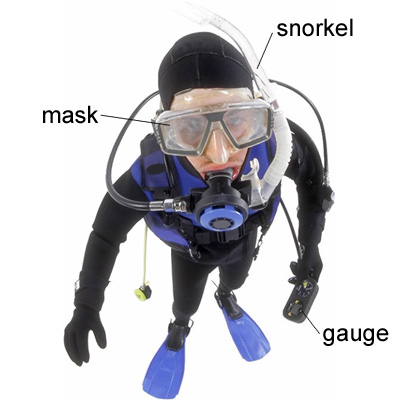
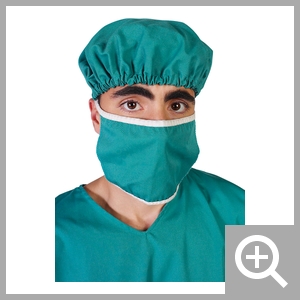
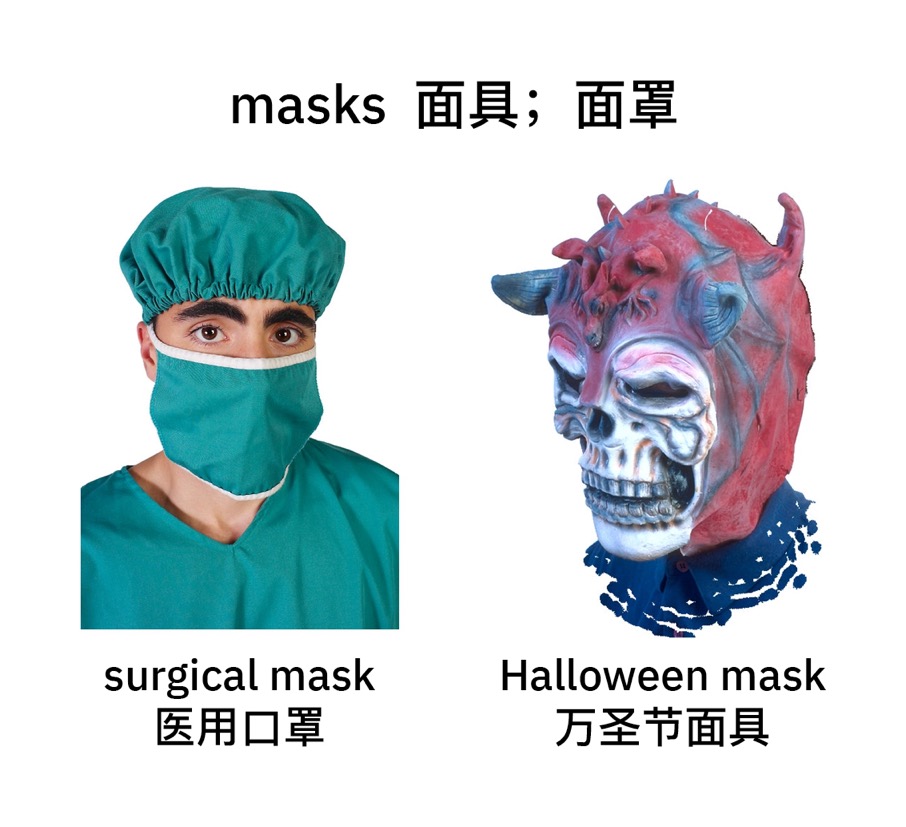
1. something that covers all or part of your face, to protect or to hide it:

a surgical face mask
He was attacked and robbed by two people wearing masks.
2.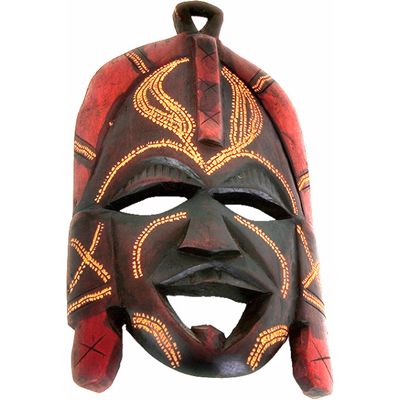
something that covers your face, and has another face painted on it, which is used for ceremonies or special occasions:
a Halloween mask
3. [usually singular] an expression or way of behaving that hides your real emotions or character
SYN front:
Her sarcasm is a mask for her insecurity.
4. a substance that you put on your face and leave there for a short time to clean the skin or make it softer
SYN face pack:
a facial mask
⇨ death mask, gas mask
mask2 verb [transitive]
1. if a smell, taste, sound etc is masked by a stronger one, it cannot be noticed because of the stronger one:
Liz turned on a radio to mask the noise.
Air-fresheners mask bad smells instead of removing them.
2. to hide your feelings or the truth about a situation:
Men often mask their true feelings with humour.
3. to cover or hide something so that it cannot be clearly seen:
The new accommodation block has all but masked the original building.
▪ hide to make something difficult to see or find, or to not show your true feelings: He hid the gun in his pocket. | She tried to hide her anger. | The actress put up a hand to hide her face from the cameras.
▪conceal formal to hide something, especially by carefully putting it somewhere. Also used when talking about hiding your feelings, especially in negative sentences: Several kilos of drugs were concealed in the back of the truck. | He could not conceal his feelings any longer. | The girl quickly concealed the photograph she had been gazing at.
▪cover up to put something over another thing that you do not want people to see, in order to hide it completely: People cover up cracks with wallpaper or tiles. | I used some make-up to cover up the spots. | She was wearing a thin shawl to cover up the bruises on her arm.
▪disguise to make someone or something seem like a different person or thing, so that other people cannot recognize them: She managed to get into the camp by disguising herself as a soldier. | The men had disguised the vessel as fishing boat.
▪camouflage to hide something by covering it with materials that make it look like the things around it: We camouflaged the plane by covering it with leaves. | The troops used charcoal to camouflage their faces. | Soldiers had camouflaged the trucks with branches and dirt.
▪obscure literary to make it difficult to see something clearly: The view was obscured by mist. | His body was found, partially obscured by bushes, at the bottom of a shallow canyon.
▪mask to make something less noticeable, for example a taste, a smell, a sound, or a feeling: The lemon helps to mask the taste of the fish. | Helen had turned on the radio to mask the noise of the traffic. | He did little to mask his contempt.
| I |
noun [countable] Date: 1500-1600
Language: French
Origin: masque, from Old Italian maschera
Language: French
Origin: masque, from Old Italian maschera
1. something that covers all or part of your face, to protect or to hide it:
2.
something that covers your face, and has another face painted on it, which is used for ceremonies or special occasions:
3. [usually singular] an expression or way of behaving that hides your real emotions or character
SYN front:
4. a substance that you put on your face and leave there for a short time to clean the skin or make it softer
SYN face pack:
⇨ death mask, gas mask
| II |
verb [transitive]1. if a smell, taste, sound etc is masked by a stronger one, it cannot be noticed because of the stronger one:
2. to hide your feelings or the truth about a situation:
3. to cover or hide something so that it cannot be clearly seen:
| THESAURUS |
▪
▪
▪
▪
▪
▪
hide to put or keep sb/sth in a place where they/it cannot be seen or found; to keep sth secret, especially your feelings 指藏、隐藏、掩盖(尤指感情) :◆ He hid the letter in a drawer. 他把信藏在抽屉里。 ◆ She managed to hide her disappointment. 她设法掩藏了自己的失望。 conceal ( to hide sb/sth; to keep sth secret指隐藏、隐瞒、掩盖 :◆ The paintings were concealed beneath a thick layer of plaster. 那些画藏在厚厚的灰泥层下面。 ◆ Tim could barely conceal his disappointment. 蒂姆几乎掩饰不住自己的失望。 NOTE When it is being used to talk about emotions, conceal is often used in negative statements.* conceal 指掩藏感情时常用于否定句。 cover to place sth over or in front of sth in order to hide it 指掩蔽、遮盖 :◆ She covered her face with her hands. 她双手掩面。 disguise to hide or change the nature of sth, so that it cannot be recognized 指掩蔽、掩饰、伪装,以免被认出 :◆ He tried to disguise his accent. 他竭力掩饰自己的口音。 mask to hide a feeling, smell, fact, etc. so that it cannot be easily seen or noticed 指掩饰、掩藏(情感、气味、事实等),以免被看出或注意到 :◆ She masked her anger with a smile. 她用微笑来掩饰她的愤怒。 camouflage to hide sb/sth by making them/it look like the things around, or like sth else 指通过使人或事物与周围环境或其他事物相似而达到伪装、掩饰的目的 :◆ The soldiers camouflaged themselves with leaves and twigs. 士兵用树叶和树枝来伪装自己。
Patterns
to hide/conceal/disguise/mask/camouflage sth behind sthto hide/conceal sth under sthto hide/conceal sth from sbto hide/conceal/disguise/mask the truth/the fact that… to hide/conceal/disguise/mask your feelings