mollusc
Longman Dictionary of Contemporary English 5++LDOCE 5++mol·lusc British English, mollusk American English /ˈmɒləsk $ ˈmɑː-/ noun [countable]  HBAa type of sea or land animal that has a soft body covered by a hard shell 软体动物 snails and other molluscs 蜗牛和其他软体动物 —molluscan /məˈlʌskən/ adjective molluscan prey 被捕食的软体动物
HBAa type of sea or land animal that has a soft body covered by a hard shell 软体动物 snails and other molluscs 蜗牛和其他软体动物 —molluscan /məˈlʌskən/ adjective molluscan prey 被捕食的软体动物Examples from the Corpus
mollusc• I pictured my navel, soft and curled like a mollusc.• The typical life cycle is indirect, and the intermediate host is usually a mollusc.• A mollusc past the initial stages of growth increases in size without significantly changing the orientation and relative proportions of its organs.• This humble mollusc can be unreservedly recommended as it is hardy and lives exclusively on algae.• The fossil record is silent on this transition, but the earlier stages of mollusc evolution are becoming clear.• There are two types of mollusc that are actively venomous: the cone shells and the blue-ringed octopus.• It is a small mollusc, the size of a mussel, that starts life as a tiny free-swimming speck of jelly.• This symmetry is required basically for optimum structural strength and to suitably accommodate the mollusc it protects.mol·lusc nounChineseSyllable
type a of or that sea Corpus land animal
mollusc
mol‧lusc
 British English, mollusk American English /ˈmɒləsk $ ˈmɑː-/ noun [countable]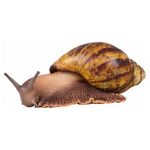
a type of sea or land animal that has a soft body covered by a hard shell:

snails and other molluscs
—molluscan /məˈlʌskən/ adjective:
molluscan prey
mol‧lusc
British English, mollusk American English /ˈmɒləsk $ ˈmɑː-/ noun [countable] Date: 1700-1800
Language: French
Origin: mollusque, from Latin molluscus 'soft', from mollis; ⇨ mollify
Language: French
Origin: mollusque, from Latin molluscus 'soft', from mollis; ⇨ mollify
a type of sea or land animal that has a soft body covered by a hard shell:
—molluscan /məˈlʌskən/ adjective: