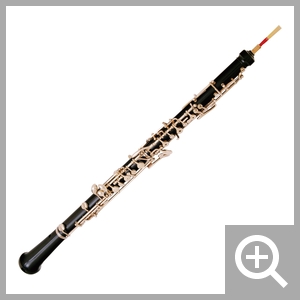
oboe
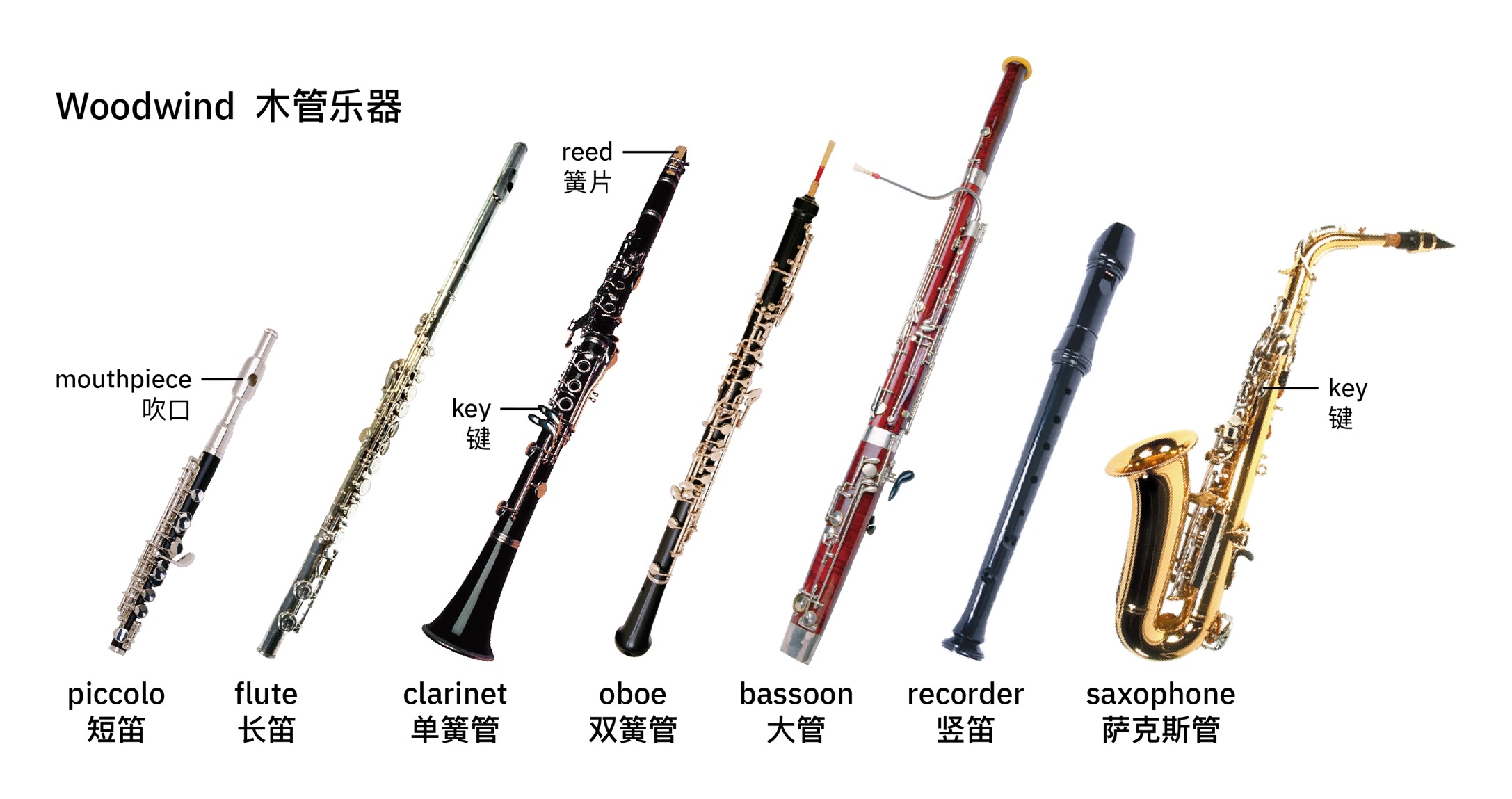
Longman Dictionary of Contemporary English 5++LDOCE 5++o·boe /ˈəʊbəʊ $ ˈoʊboʊ/ noun [countable] APMa wooden musical instrument like a narrow tube, which you play by blowing air through a reed 双簧管 →5 see picture at 见图 woodwind —oboist noun [countable]
Examples from the Corpus
oboe• He was a nice chap called Roland who entertained us with such finesse on his flute and oboe.• A Congress of Passions was written in 1994 for counter-tenor, piano and oboe.• The strings unfold a sequence of shivery chords, and voice and oboe briefly entwine before the singer is left in solitude.• You can not imagine the glorious effect of a symphony with flutes, oboes and clarinets.• There is more dicey woodwind intonation in the Eroica, and the oboe tone in the Funeral March curdles alarmingly.• The oboe tends to lose power and body in its upper register, but with the clarinet the opposite is the case.Origin oboe (1600-1700) Italian French hautbois, from haut “high” + bois “wood”o·boe nounChineseSyllable
narrow Corpus a instrument wooden musical like a
oboe
o‧boe /ˈəʊbəʊ $ ˈoʊboʊ/
 noun [countable]
—oboist noun [countable]
o‧boe /ˈəʊbəʊ $ ˈoʊboʊ/
noun [countable] Date: 1600-1700
Language: Italian
Origin: French hautbois, from haut 'high' + bois 'wood'
a wooden musical instrument like a narrow tube, which you play by blowing air through a reedLanguage: Italian
Origin: French hautbois, from haut 'high' + bois 'wood'
—oboist noun [countable]