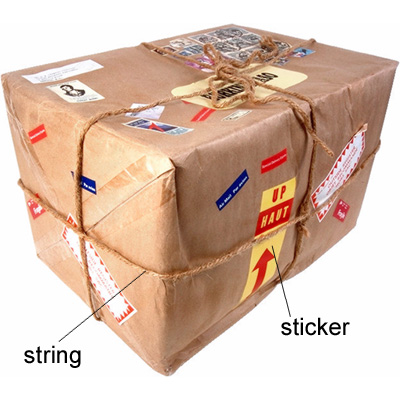
par·cel1 /ˈpɑːsəl $ ˈpɑːr-/ ●●○S3 noun [countable]1especially British EnglishTCM an object that has been wrapped in paper or put in a specialenvelope, especially so that it can be sent by post 包裹;邮包SYN packageThe parcel was delivered last week. 那个邮包上周送到了。He sends regular food parcels to his family in Libya. 他定期给在利比亚的家人邮寄食品包裹。parcel ofa parcel of clothes and blankets 一包衣服和毯子 →4 See picture of 见图 PACKAGE 12AREAan area of land that is part of a larger area which has been divided up 〔土地的〕一块,一片〔指已被分割的较大块土地的一部分〕parcel ofa parcel of farmland 一块农田3.British EnglishDF a small quantity of food that has been wrapped up, usually in pastry 食品的馅料〔通常指油酥点心中的馅料〕 → be part and parcel of somethingat part1(28)
Examples from the Corpus
parcel• He will bear a parcel from the mysterious, lovely, no-place-jacketed Carolina.• a parcel of farmland• He believes this 11-acreparcel will set the tone for the other 100 acres of undeveloped land also in the area.• Or suppose the president owns a great parcel of land.• That afternoon, Isabel finishedpacking her parcels, upstairs in the attic.• In fact, it is moderntechnology at work in the world of overnightparceldeliveries.• Every child had a gasmask and a suitcase, or paper parcel.• A Weeklyinvestigation last year showed that similarparcelssold for thousands of dollars less per acre around the same time.• Now she understoodwhyAngel had brought a strangeparcel with him.parcel2 verb (parcelled, parcelling British English, parceled, parceling American English)1parcel something ↔ off phrasal verb American EnglishBBTto divide something into small parts so that it can be sold 把…分成小份〔待售〕The new owner has parceled off many of the company’s assets. 新老板把公司的许多资产分成小份以出售。2parcel something ↔ out phrasal verbSHAREto divide or share something among several people 把…分配They didn’t want the federal government parceling out food supplies. 他们不希望联邦政府分配食品供给。3parcel something ↔ up phrasal verb British Englisha)TIEto make something into a parcel by wrapping it up 把…包起来,把…打包She parcelled up the photos. 她把照片包了起来。b)DIVIDEto divide something into small parts, especially so that it is easier to deal with 把…分成小份〔以方便处理〕University education is often parcelled up into specialist teaching units. 大学教育常常被细化为各门专业学科。→ See Verb table
Examples from the Corpus
parcel• They parcelimagesscore through secretivedrawing and glaze Conté with hissingfixative.• Theorists have found it difficult to wrap and parcel me in a neatcompartment.• Am I in bondage, that you think to parcel me off as you see fit?• It would be absurd to parcel out equalsums of research money to everyone.• Thatcher also used to parcel out jobs to representatives of different interest groups in the party.• Many companies parcel out portions of their profits to stockholders in the form of cashdividendpayments.• If you really want to make an impression, decorate a basket or box to parcel them in.• He requested her to parcel up most carefully in an oiledcloth his other gun and have it sent to him.From Longman Business Dictionaryparcelpar‧cel1 /ˈpɑːsəlˈpɑːr-/ noun [countable]1TRANSPORTan object or objects, packed together and wrapped up ready to be sent somewhereSYN PACKAGEThe next lot of parcels is being delivered tomorrow.the train company’sparcel service.parcel post (=a mail service for collecting and delivering parcels)2PROPERTY a piece of land that is one of several parts of a larger area of landThe company owns 76 parcels of industrial land in 23 states.HTV is redeveloping a 21-acre parcel of land close to its studios.3FINANCE a set of relatedshares etc that are all sold or bought at the same timeThey sold a big parcel of shares last week for £82.6 million.parcelparcel2 verb (parcelled, parcelling British English, parceled, parceling) American English →parcel something → out →parcel something → up→ See Verb tableOriginparcel1(1300-1400)Old FrenchLatinparticula; → PARTICLE
Date: 1300-1400 Language: Old French Origin: Latin particula; ⇨ particle
1. especially British English an object that has been wrapped in paper or put in a special envelope, especially so that it can be sent by post SYN package: The parcel was delivered last week. He sends regular food parcels to his family in Libya. parcel of a parcel of clothes and blankets 2. an area of land that is part of a larger area which has been divided up parcel of a parcel of farmland 3. British English a small quantity of food that has been wrapped up, usually in pastry ⇨ be part and parcel of something at part1(28)
II
parcel2verb (past tense and past participleparcelled, present participleparcellingBritish English, parceled, parcelingAmerican English)
parcel something ↔ offphrasal verbAmerican English to divide something into small parts so that it can be sold: The new owner has parceled off many of the company’s assets. parcel something ↔ outphrasal verb to divide or share something among several people: They didn’t want the federal government parceling out food supplies. parcel something ↔ upphrasal verbBritish English 1. to make something into a parcel by wrapping it up: She parcelled up the photos. 2. to divide something into small parts, especially so that it is easier to deal with: University education is often parcelled up into specialist teaching units.
These words all describe feeling or showing fear.以上各词均形容害怕。
afraid [not before noun] feeling fear; worried that sth bad might happen指害怕、担心不幸的事可能发生:◆There's nothing to be afraid of.没有什么要害怕的。◆Aren't you afraid (that) you'll fall?你不怕会跌倒吗?
frightenedfeeling fear; worried that sth bad might happen指害怕、担心不幸的事可能发生:◆a frightened child受惊的孩子◆She was frightened that the glass would break.她担心玻璃会破碎。
scared(ratherinformal) feeling fear; worried that sth bad might happen指害怕、担心不幸的事可能发生:◆The thieves got scared and ran away.小偷慌张起来,都跑掉了。
afraid, frightened or scared?用 afraid、frightened 还是 scared?
Scared is more informal, more common in speech, and often describes small fears. Afraid cannot come before a noun. It can only take the preposition of, not about. If you are afraid/frightened/scared of sb/sth/doing sth or afraid/frightened/scared to do sth, you think you are in danger of being hurt or suffering in some way. If you are frightened/scared about sth/doing sth, it is less a fear for your personal safety and more a worry that sth unpleasant might happen. * scared 较非正式,较常用于日常谈话中,常指有些害怕。afraid 不用于名词前,只能与介词 of 而非 about 连用。be afraid/frightened/scared of sb/sth/doing sth 或 be afraid/frightened/scared to do sth 均指担心受到伤害或遭受痛苦。be frightened/scared about sth/doing sth 较少指担心个人安全,更多的是指害怕不快的事情发生。
terrifiedvery frightened指恐惧、很害怕:◆I was terrified (that) she wouldn't come.我很害怕她不来。◆She looked at him with wide, terrified eyes.她看着他,双目圆睁,充满恐惧。
alarmedafraid that sth dangerous or unpleasant might happen指担心危险或不快的事情发生:◆She was alarmed at the prospect of travelling alone.她一想到独自旅行的情景就害怕。
paranoid(ratherinformal) afraid or suspicious of other people and believing that they are trying to harm you, in a way that is not reasonable指多疑、不合情理地恐惧:◆You're just being paranoid.你只是在疑神疑鬼。
Patterns
afraid/frightened/scared of spiders, etc.
frightened/scared/paranoid about …
afraid/frightened/scared/terrified that …
afraid/frightened/scared to open the door, etc.
Don't be afraid/frightened/scared/alarmed.
par·celBrE/ˈpɑːsl/🔊NAmE/ˈpɑːrsl/🔊verbpresent simple - I / you / we / theyparcelBrE/ˈpɑːsl/🔊NAmE/ˈpɑːrsl/🔊present simple - he / she / itparcelsBrE/ˈpɑːslz/🔊NAmE/ˈpɑːrslz/🔊past simpleparcelledBrE/ˈpɑːsld/🔊NAmE/ˈpɑːrsld/🔊past participleparcelledBrE/ˈpɑːsld/🔊NAmE/ˈpɑːrsld/🔊past simple(especiallyUS) parceledBrE/ˈpɑːsld/🔊NAmE/ˈpɑːrsld/🔊past participle(especiallyUS) parceledBrE/ˈpɑːsld/🔊NAmE/ˈpɑːrsld/🔊 -ing formparcellingBrE/ˈpɑːslɪŋ/🔊NAmE/ˈpɑːrslɪŋ/🔊 -ing form(especiallyUS) parcelingBrE/ˈpɑːslɪŋ/🔊NAmE/ˈpɑːrslɪŋ/🔊(especiallyBrE) ~sth (up)towrapsthupandmakeitintoaparcel包;裹好;打包◆Sheparcelledupthebookstosend. 她把要寄走的书包了起来。🔊🔊●ˌparcelsth↔ˈouttodividesthintopartsorbetweenseveralpeople把某物分开;把某物(在几个人之间)分◆Thelandwasparcelledoutintosmalllots. 这块地被分成了若干小块。🔊🔊
 especially British EnglishTCM an object that has been wrapped in paper or put in a special envelope, especially so that it can be sent by post 包裹;邮包 SYN package The parcel was delivered last week. 那个邮包上周送到了。 He sends regular food parcels to his family in Libya. 他定期给在利比亚的家人邮寄食品包裹。parcel of a parcel of clothes and blankets 一包衣服和毯子2 AREAan area of land that is part of a larger area which has been divided up 〔土地的〕一块,一片〔指已被分割的较大块土地的一部分〕parcel of a parcel of farmland 一块农田3. British EnglishDF a small quantity of food that has been wrapped up, usually in pastry 食品的馅料〔通常指油酥点心中的馅料〕 → be part and parcel of something at part1(28)
 noun [countable]