peacock
Longman Dictionary of Contemporary English 5++LDOCE 5++pea·cock /ˈpiːkɒk $ -kɑːk/ noun [countable]  HBBa large bird, the male of which has long blue and green tail feathers that it can lift up and spread out (雄)孔雀 → peahen
HBBa large bird, the male of which has long blue and green tail feathers that it can lift up and spread out (雄)孔雀 → peahenExamples from the Corpus
peacock• There was a peacock there, stampeded by the queue.• Every time she seduces a fresh peacock, she wins a little extra sperm that she probably does not need.• The low-growing peacock gingers also would fit well in such a grouping.• Above the scoop neckline of her peacock blue dress, an ill-defined rash of mottled pink broke out, then faded.• He climbed away from their reaching hands, on to the very top of the gantry, breaking the spines of his peacock wings.• In a few weeks' time this year's peacocks, immaculately spruce, would emerge from pupae.• The peacock butterfly normally rests with its wings pressed tightly together.• No one in Lancre had ever worn a waistcoat embroidered with peacocks.Origin peacock (1300-1400) pea “peacock” ((900-1000)) (from Old English, from Latin pavo) + cockpea·cock nounChineseSyllable
which bird, of large Corpus a the male
Peacock
Peacock, Thomas Love

(1785–1866) a British writer and poet who used satire (=a way of writing in which you make someone seem funny in order to show their faults) to criticize the politicians and writers of his time, and who is known especially for his novels Headlong Hall and Nightmare Abbey
Peacock, Thomas Love
(1785–1866) a British writer and poet who used satire (=a way of writing in which you make someone seem funny in order to show their faults) to criticize the politicians and writers of his time, and who is known especially for his novels Headlong Hall and Nightmare Abbey
peacock
pea‧cock /ˈpiːkɒk $ -kɑːk/ noun [countable]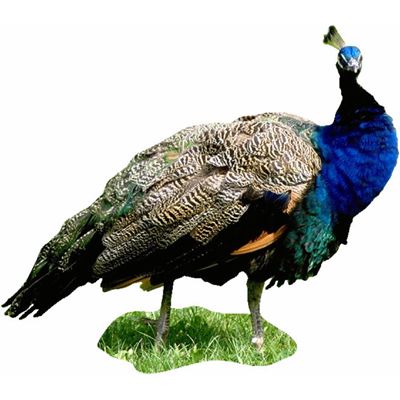
a large bird, the male of which has long blue and green tail feathers that it can lift up and spread out ⇨ peahen
pea‧cock /ˈpiːkɒk $ -kɑːk/
noun [countable] Date: 1300-1400
Origin: pea 'peacock' (900-1000) (from Old English, from Latin pavo) + cock
Origin: pea 'peacock' (900-1000) (from Old English, from Latin pavo) + cock
a large bird, the male of which has long blue and green tail feathers that it can lift up and spread out ⇨ peahen