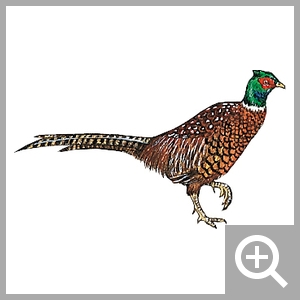
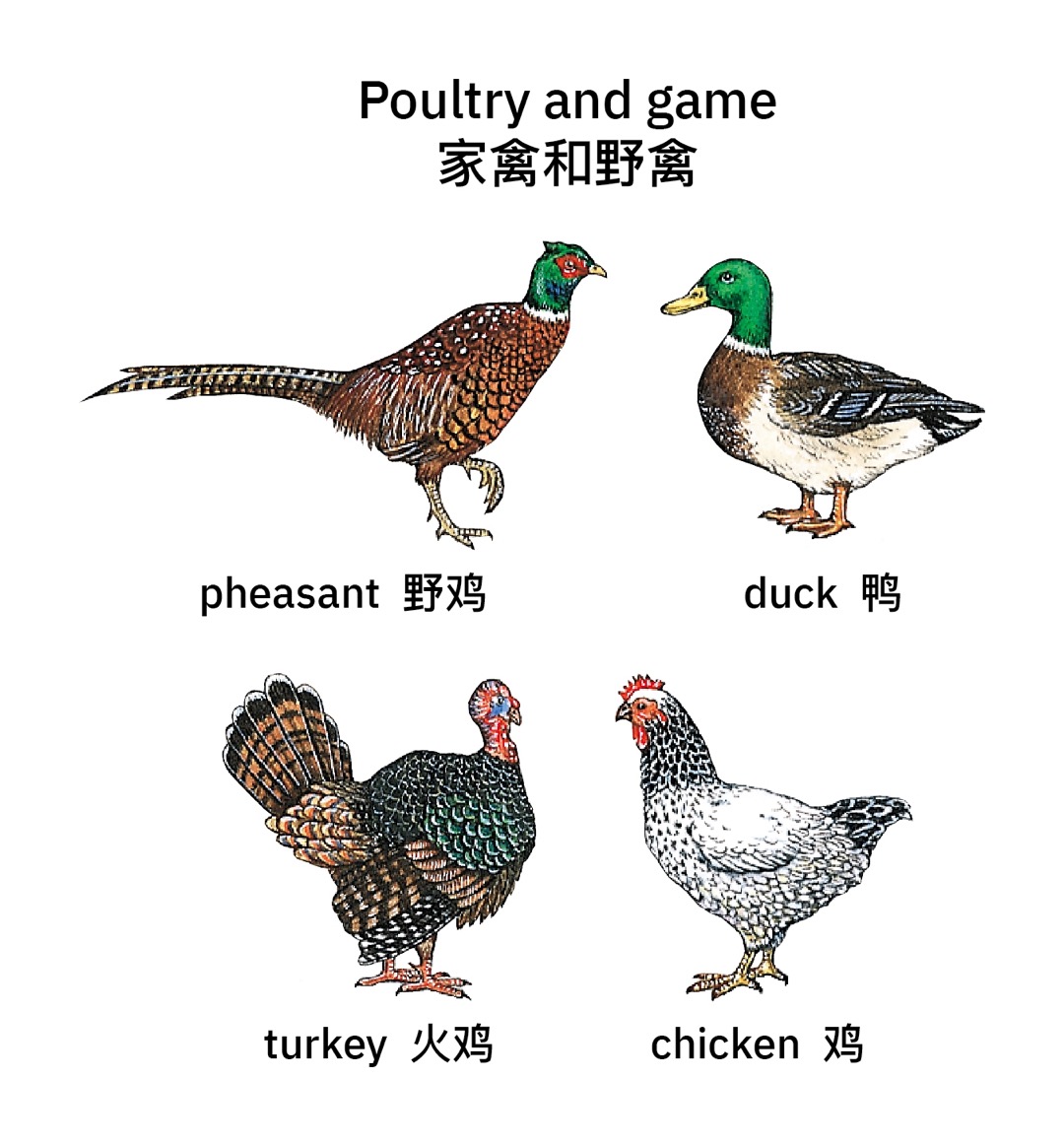
pheasant
Longman Dictionary of Contemporary English 5++LDOCE 5++pheas·ant /ˈfezənt/ noun [countable, uncountable]  HBAa large bird with a long tail, often shot for food, or the meat of this bird 雉,野鸡;野鸡肉
HBAa large bird with a long tail, often shot for food, or the meat of this bird 雉,野鸡;野鸡肉Examples from the Corpus
pheasant• This was a swampy field where I once managed to shoot a pheasant as it became airborne, screeching.• A pheasant, caught in a stream of air, had dashed itself to death.• In fact, many gourmets consider pheasant and grouse to be the most delectable of all game birds.• Even the gentry, then, were having to eat pheasant without bread; what was the world coming to?• Pheasant: readily available and surprisingly cheap, any chicken recipe can be adapted for pheasant.• Also good with roasted pheasant and as contrast to many braised dishes.• Lightly season pheasant pieces with salt and pepper.• Transfer pheasant, still in pan, to the oven and cook for 8 to 10 minutes.Origin pheasant (1200-1300) Anglo-French fesaunt, from Latin, from Greek phasianos, from Phasis ancient river in Asiapheas·ant nounChineseSyllable
large for shot long food, a bird tail, a with often Corpus
pheasant
pheas‧ant /ˈfezənt/
 noun [uncountable and countable]
a large bird with a long tail, often shot for food, or the meat of this bird
pheas‧ant /ˈfezənt/
noun [uncountable and countable] Date: 1200-1300
Language: Anglo-French
Origin: fesaunt, from Latin, from Greek phasianos, from Phasis ancient river in Asia
Language: Anglo-French
Origin: fesaunt, from Latin, from Greek phasianos, from Phasis ancient river in Asia
a large bird with a long tail, often shot for food, or the meat of this bird