piston
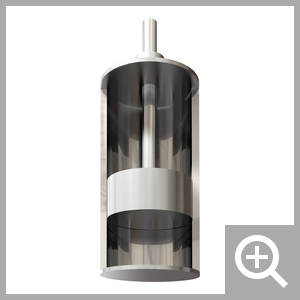
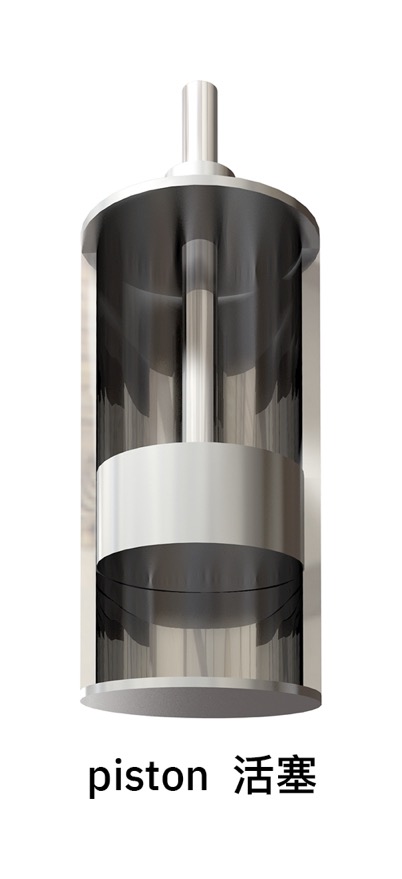
Longman Dictionary of Contemporary English 5++LDOCE 5++pis·ton /ˈpɪstən/ noun [countable] TEa part of an engine consisting of a short solid piece of metal inside a tube, which moves up and down to make the other parts of the engine move 活塞
Examples from the Corpus
piston• Some of their multi-cylinder motor cycle engines have pistons little bigger than thimbles.• Here, the float arm closes a horizontal piston, fitted with a washer against the valve seating.• It consists of an upright cylinder containing a twelve-inch piston with rod two and a half inches in diameter.• He used a cane and tried to walk fast and his hips bobbed like pistons gone awry.• Controlled by computer and battery-powered hydraulics, they push or pull like pistons to damp movement by the walls.• But as the barrel swung it would push a small piston that, in return, moved the hand lever.• The steel piston is fitted with brass piston rings which, says Hytek, makes for longer life.• This is a wonderful piece of ancient machinery of indeterminate age, and consists of a crank-driven triple piston pump.Origin piston (1700-1800) French Italian pistone “large stick for crushing”, from pistare “to crush”pis·ton nounChineseSyllable
consisting a Corpus a of part an of engine
piston
pis‧ton /ˈpɪstən/
 noun [countable]
pis‧ton /ˈpɪstən/
noun [countable] Date: 1700-1800
Language: French
Origin: Italian pistone 'large stick for crushing', from pistare 'to crush'
a part of an engine consisting of a short solid piece of metal inside a tube, which moves up and down to make the other parts of the engine move
Language: French
Origin: Italian pistone 'large stick for crushing', from pistare 'to crush'