prosthesis
Longman Dictionary of Contemporary English 5++LDOCE 5++pros·the·sis /prɒsˈθiːsɪs $ prɑːs-/ noun (plural prostheses /-siːz/) [countable]  medicalMH an artificial leg, tooth, or other part of the body which takes the place of a missing part 义肢;假体〔如假肢、假牙等〕 —prosthetic /-ˈθetɪk/ adjective
medicalMH an artificial leg, tooth, or other part of the body which takes the place of a missing part 义肢;假体〔如假肢、假牙等〕 —prosthetic /-ˈθetɪk/ adjectiveExamples from the Corpus
prosthesis• Most of his upper jaw was removed and a prosthesis was fitted.• A prosthesis used in a joint replacement costs between $ 5,000 and $ 10,000.• Intimates knew him as Stumpy Will and remarked upon the craftsmanship and lifelike nature of his carved elm prosthesis.• This child has a metal prosthesis and kicks hell out of the others at football.• In much the same way computer simulation has been used in bioengineering in the design of prosthesis such as artificial limbs or hips.• Endoprosthesis placement was performed in the conventional manner using a plastic prosthesis for the bile and pancreatic ducts.Origin prosthesis (1500-1600) Modern Latin Greek, “addition”, from prostithenai “to add to”pros·the·sis nounChineseSyllable
Corpus tooth, other of or leg, part an artificial
prosthesis
pros‧the‧sis /prɒsˈθiːsəs, prɒsˈθiːsɪs $ prɑːs-/
 noun (plural prostheses /-siːz/) [countable]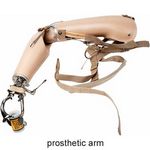
medical an artificial leg, tooth, or other part of the body which takes the place of a missing part
—prosthetic /-ˈθetɪk/ adjective
pros‧the‧sis /prɒsˈθiːsəs, prɒsˈθiːsɪs $ prɑːs-/
noun (plural prostheses /-siːz/) [countable] Date: 1500-1600
Language: Modern Latin
Origin: Greek, 'addition', from prostithenai 'to add to'
Language: Modern Latin
Origin: Greek, 'addition', from prostithenai 'to add to'
medical an artificial leg, tooth, or other part of the body which takes the place of a missing part
—prosthetic /-ˈθetɪk/ adjective