root
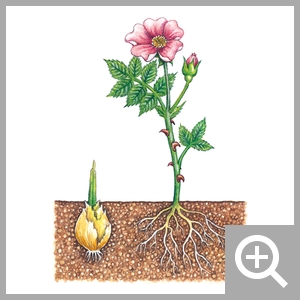
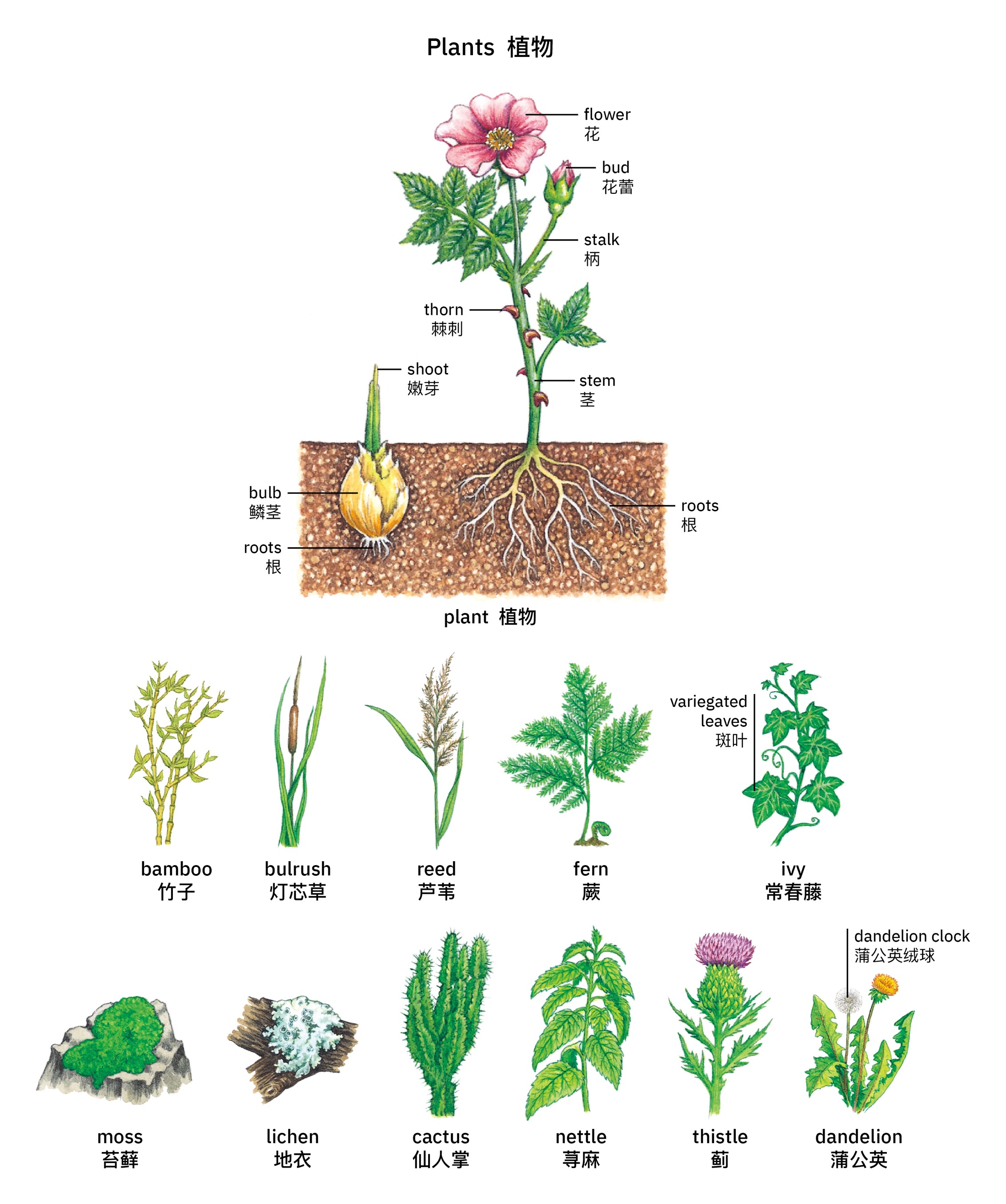
Longman Dictionary of Contemporary English 5++LDOCE 5++root1 /ruːt/ ●●● S2 W2 noun [countable] 1 plant 植物HBP the part of a plant or tree that grows under the ground and gets water from the soil 根 tree roots 树根 These plants produce a number of thin roots. 这些植物会长出一些细根。 → root crop, root vegetable →5 see picture at 见图 tree2 cause of a problem 问题的起因CAUSE the main cause of a problem 〔问题的〕根源,起因be/lie at the root of something (=be the cause of something) 是某事物的根本原因 Allergies are at the root of a lot of health problems. 过敏是许多健康问题的根源。 The love of money is the root of all evil. 贪财是万恶之源。 A competent mechanic should be able to get to the root of the problem (=find out the cause of a problem). 称职的机械师应该能够找到问题的根源。 the root causes of crime 犯罪的根本原因3 origin/main part 起源/主要部分COME FROM/ORIGINATE the origin or main part of something such as a custom, law, activity etc, from which other things have developed 起源;基础;根本root in a legal system with roots in English common law 基于英国普通法的司法制度 Jazz has its roots in the folk songs of the southern states of the US. 爵士乐起源于美国南部诸州的民歌。be/lie at the root of something 是某事物的根本原因 the liberal economic policies which lie at the root of American power 成为美国国力基础的自由经济政策4 FAMILY CONNECTION 家族联系somebody’s roots COME FROM/ORIGINATEyour relation to a place because you were born there, or your family used to live there 某人的根〔指与出生地、家乡的联系〕 immigrants keeping in touch with their cultural roots 和自己的文化根脉一直保持着联系的移民 Alex Haley’s story about his search for his roots became a bestseller. 亚历克斯·哈利写的关于他寻根的故事成了畅销书。5 put down roots LIVE SOMEWHEREif you put down roots somewhere, you start to feel that a place is your home and to have relationships with the people there 扎下根 Because of her husband’s job, they’d moved too often to put down roots anywhere. 因为丈夫工作的关系,他们经常搬家,难以在一个地方扎下根来。6 tooth/hair etc 牙齿/头发等HBH the part of a tooth, hair etc that connects it to the rest of your body 〔牙齿、头发等的〕根部 She’d pulled some of Kelly’s hair out by the roots. 她连根拔下了凯利的几根头发。7 take root a) START something/MAKE something STARTif an idea, method, activity etc takes root, people begin to accept or believe it, or it begins to have an effect 〔观点、方法、活动等〕扎根;深入人心;开始见效 Economists believe that economic recovery will begin to take root next year. 经济学家相信明年经济将开始复苏。 b) HBPif a plant takes root, it starts to grow where you have planted it 〔植物〕生根8. have a (good) root round British English informalLOOK FOR to search for something by moving other things around 翻找9. language 语言 technicalSLG the basic part of a word which shows its main meaning, to which other parts can be added. For example, the word ‘coldness’ is formed from the root ‘cold’ and the suffix ‘ness’. 词根 → stem10 mathematics 数学 technicalHMN a number that, when multiplied by itself a certain number of times, equals the number that you have 根 2 is the fourth root of 16. 2是16的4次方根。11 root and branch GET RID OFif you destroy or change something root and branch, you get rid of it or change it completely and permanently because it is bad 彻底地,永久地〔消除或改变不良事物〕 a root and branch reform of the electoral system 对选举制度的彻底改革 → cube root, square root, grass roots
Examples from the Corpus
root• They usually have well developed roots and fragile stems with which to resist the pressure of the current.• But its roots go back decades.• I doubt whether you can have deep London roots, or Birmingham, or even Stoke-on-Trent roots.• The long roots of Water Lettuce provide shelter for fish and fry.• The dozen rich families have intermarried so many times that family trees are tangles of roots.• The word bond comes from the same root as bind, for the corporation binds it-self to make the specified payments.• The love of money is said to be the root of all evil.• Cover the roots with plenty of soil.• Low taxation of the rich is the root of the economic problems in this country.• Truffles are parasites that grow on the roots of trees.• We need to get to the root of the problem.• The roots of the wars in the Balkans go back hundreds of years.root causes• But Didion is interested in root causes, not in immediate provocations.• Like retrenching, the technique of restricting behavior betrays a peculiar logic about performance and its root causes.• The main inhibitors to progress, and the root causes of fear, can include: Unrealistic personal goals and expectations.• What are the root causes? 4.• The charity used the occasion to call for fresh action to tackle the root causes of world poverty.• Health promotion - keeping people healthy, and treating the root causes of ill health.• Some have their root causes in subjective factors, others in objective factors and others still are a mixture.• While standard educational practices are not in themselves root causes of work inhibition, these practices usually exacerbate the problem.be/lie at the root of something• As we shall find, this distinction lies at the root of Anselm's movements in his last years as archbishop.• It is our illusion of separateness which lies at the root of our fears.• Several other causes, according to their findings, often lie at the root of violence against tenants.• We found that two key resource uses and two basic technologies lay at the root of lunar industry.• That view lies at the root of a government drive against the racist right.• Consent, which lies at the root of self-determination, should be the conceptual mechanism whereby the right is guaranteed and safeguarded.• They overlook the human ability to negate, which lies at the root of thinking.• Biblical writings, which lie at the root of Western culture, make numerous mention of portents in the heavens.root2 verb 1 plant 植物 a) [intransitive]HBP to grow roots 生根 New shrubs will root easily in summer. 新灌木在夏季容易生根。 b) [transitive] if a plant is rooted somewhere, it is held in the ground firmly by its roots 使〔植物〕牢牢扎根 a bush firmly rooted in the hard ground 牢牢扎根于硬实土地的一丛灌木root itself Clumps of thyme had rooted themselves between the rocks. 一丛丛百里香在岩石中间扎了根。n Grammar Root is either passive or reflexive in this meaning.2 be rooted in something COME FROM/ORIGINATEto have developed from something and be strongly influenced by it 起源于某事物3 search 寻找 [intransitive always + adverb/preposition]LOOK FOR to search for something by moving things around 翻找 SYN rummage4 pigs 猪 [intransitive usually + adverb/preposition] if a pig roots somewhere, it looks for food under the ground 拱土觅食5 rooted to the spot/floor/ground etc NOT MOVINGso shocked, surprised, or frightened that you cannot move 〔震惊、惊讶或害怕得〕呆住不动6 root for somebody phrasal verb informal 7 root something ↔ out phrasal verb 8.root something ↔ up phrasal verb DLGto dig or pull a plant up with its roots 将〔植物〕连根挖起[拔起]→ See Verb tableExamples from the Corpus
root• To begin with, though, it is the narrator, Austin, in whom our sympathies are rooted.• To prevent birds pulling them up, net the rows until they root and cut off any wispy tips.• He roots around in a deep drawer and comes out with a bright, brand-new-looking leather strap.• Saguaros in bloom, the glare of a horned owl and javelinas rooting for a bite to eat.• The bush was too firmly rooted in the hard earth to dig up easily.• A prime source of violence resides in the elitist educational strategies that are firmly rooted in the school ethos.• A crest of wavy, blond hair was loosely rooted on a magisterial forehead.• These include massacres and dislocation of civilians in the name of rooting out supposed guerrilla sympathizers.root itself• Thus, the root itself is at depth 0.root through/in/amongst something (for something)• His virtue was as much rooted in superstition as in goodness.• My love of nature, of life and of my country took root in these simple but spiritual beginnings.• Realism directed its challenge to the attempt to construct an autonomous science of law which was rooted in legal positivism.• Such abuses produced a deregulatory movement that took root in the Carter administration and flourished under Ronald Reagan.• The ban on giving the imagination and the mind free play is rooted in the fear of excessive individuality.• The Dundee disease has its roots in a virus called money.• The twelfth-century papacy was rooted in a distant and revered past.Origin root1 (1100-1200) Old Norse rot root2 1. (1200-1300) → ROOT12. Old English wrotan. root for (1800-1900) Perhaps from rout (of cattle) “to make a loud sound” ((14-19 centuries)), from Old Norse rautaroot1 nounroot2 verb →n GRAMMAR1LDOCE OnlineChinese
or under of the Corpus plant grows tree that a part
See ldoce4455jpg for more
root
root1 S2 W2 /ruːt/ 
 noun [countable]

tree roots
These plants produce a number of thin roots. ⇨ root crop, root vegetable
2. CAUSE OF A PROBLEM the main cause of a problem
be/lie at the root of something (=be the cause of something)
Allergies are at the root of a lot of health problems.
The love of money is the root of all evil.
A competent mechanic should be able to get to the root of the problem (=find out the cause of a problem).
the root causes of crime
3. ORIGIN/MAIN PART the origin or main part of something such as a custom, law, activity etc, from which other things have developed
root in
a legal system with roots in English common law
Jazz has its roots in the folk songs of the southern states of the US.
be/lie at the root of something
the liberal economic policies which lie at the root of American power
4. FAMILY CONNECTION sb’s roots your relation to a place because you were born there, or your family used to live there:
immigrants keeping in touch with their cultural roots
Alex Haley’s story about his search for his roots became a bestseller.
5. put down roots if you put down roots somewhere, you start to feel that a place is your home and to have relationships with the people there:
Because of her husband’s job, they’d moved too often to put down roots anywhere.
6. TOOTH/HAIR ETC the part of a tooth, hair etc that connects it to the rest of your body:
She’d pulled some of Kelly’s hair out by the roots.
7. take root
a. if an idea, method, activity etc takes root, people begin to accept or believe it, or it begins to have an effect:
Economists believe that economic recovery will begin to take root next year.
b. if a plant takes root, it starts to grow where you have planted it
8. have a (good) root round British English informal to search for something by moving other things around
9. LANGUAGE technical the basic part of a word which shows its main meaning, to which other parts can be added. For example, the word ‘coldness’ is formed from the root ‘cold’ and the suffix ‘ness’. ⇨ stem
10. MATHEMATICS technical a number that, when multiplied by itself a certain number of times, equals the number that you have:
2 is the fourth root of 16.
11. root and branch if you destroy or change something root and branch, you get rid of it or change it completely and permanently because it is bad:
a root and branch reform of the electoral system
⇨ cube root, square root, grass roots
■ where something comes from
▪origin/origins the place or situation in which something begins to exist: the origins of the conflict in the Middle East | The book explains the origin of words. | Her disability is genetic in origin.
▪source the thing, place etc that you get something from: They get their money from various sources. | Beans are a good source of protein.
▪root the root of a problem is the main cause. The roots of something are the things that it was originally based on: Allergies are at the root of a lot of health problems. | At the root of the crisis was a shortage of hard cash. | They want a return to the roots of Christianity. | Reggae has its roots in a range of different musical styles.
▪the birthplace of something the place where something first started to exist: New Orleans is the birthplace of jazz. | Ethiopia, the birthplace of coffee
▪the cradle of something the place where something important first started – used mainly in the following phrases: Ancient Athens is considered to be the cradle of democracy. | Baghdad was the cradle of civilization.
▪starting point an idea, suggestion etc from which a discussion, process, or project can develop: His paper provided an excellent starting point for discussion.
root2 verb
Origin: wrotan. root for 1800-1900 Perhaps from rout (of cattle) 'to make a loud sound' (14-19 centuries), from Old Norse rauta1. PLANT
a. [intransitive] to grow roots:
New shrubs will root easily in summer.
b. [transitive usually passive] if a plant is rooted somewhere, it is held in the ground firmly by its roots:
a bush firmly rooted in the hard ground
root itself
Clumps of thyme had rooted themselves between the rocks.
2. be rooted in something to have developed from something and be strongly influenced by it:
The country’s economic troubles are rooted in a string of global crises.
This feeling of rejection is often deeply rooted in childhood.
3. SEARCH [intransitive always + adverb/preposition] to search for something by moving things around
SYN rummage
root through/in/amongst something (for something)
Leila rooted through her handbag for a pen.
4. PIGS [intransitive usually + adverb/preposition] if a pig roots somewhere, it looks for food under the ground
root for
pigs rooting for truffles
5. rooted to the spot/floor/ground etc so shocked, surprised, or frightened that you cannot move:
She stood rooted to the spot, staring at him.
root for somebody phrasal verb informal
1. to want someone to succeed in a competition, test, or difficult situation:
You can do it – I’m rooting for you.
2. especially American English to support a sports team or player by shouting and cheering:
the Los Angeles fans rooting for the Lakers
root something ↔ out phrasal verb
1. to find out where a particular kind of problem exists and get rid of it:
Action is being taken to root out corruption in the police force.
2. to find something by searching for it:
I’ll try and root out something for you to wear.
root something ↔ up phrasal verb
to dig or pull a plant up with its roots
| I |
noun [countable] Date: 1100-1200
Language: Old Norse
Origin: rot
1. PLANT the part of a plant or tree that grows under the ground and gets water from the soil:Language: Old Norse
Origin: rot
2. CAUSE OF A PROBLEM the main cause of a problem
be/lie at the root of something (=be the cause of something)
3. ORIGIN/MAIN PART the origin or main part of something such as a custom, law, activity etc, from which other things have developed
root in
be/lie at the root of something
4. FAMILY CONNECTION sb’s roots your relation to a place because you were born there, or your family used to live there:
5. put down roots if you put down roots somewhere, you start to feel that a place is your home and to have relationships with the people there:
6. TOOTH/HAIR ETC the part of a tooth, hair etc that connects it to the rest of your body:
7. take root
a. if an idea, method, activity etc takes root, people begin to accept or believe it, or it begins to have an effect:
b. if a plant takes root, it starts to grow where you have planted it
8. have a (good) root round British English informal to search for something by moving other things around
9. LANGUAGE technical the basic part of a word which shows its main meaning, to which other parts can be added. For example, the word ‘coldness’ is formed from the root ‘cold’ and the suffix ‘ness’. ⇨ stem
10. MATHEMATICS technical a number that, when multiplied by itself a certain number of times, equals the number that you have:
11. root and branch if you destroy or change something root and branch, you get rid of it or change it completely and permanently because it is bad:
⇨ cube root, square root, grass roots
| THESAURUS |
▪
▪
▪
▪
▪
▪
| II |
verb Sense 3
Language: Old EnglishOrigin: wrotan. root for 1800-1900 Perhaps from rout (of cattle) 'to make a loud sound' (14-19 centuries), from Old Norse rauta
a. [intransitive] to grow roots:
b. [transitive usually passive] if a plant is rooted somewhere, it is held in the ground firmly by its roots:
root itself
2. be rooted in something to have developed from something and be strongly influenced by it:
3. SEARCH [intransitive always + adverb/preposition] to search for something by moving things around
SYN rummage
root through/in/amongst something (for something)
4. PIGS [intransitive usually + adverb/preposition] if a pig roots somewhere, it looks for food under the ground
root for
5. rooted to the spot/floor/ground etc so shocked, surprised, or frightened that you cannot move:
root for somebody phrasal verb informal
1. to want someone to succeed in a competition, test, or difficult situation:
2. especially American English to support a sports team or player by shouting and cheering:
root something ↔ out phrasal verb
1. to find out where a particular kind of problem exists and get rid of it:
2. to find something by searching for it:
root something ↔ up phrasal verb
to dig or pull a plant up with its roots
Animals 动物
animals mate/breed/reproduce/feed (on sth) 动物交配/繁育/繁殖/以…为食 fish/amphibians swim/spawn (= lay eggs)鱼/两栖动物游动/产卵 birds fly/migrate/nest/sing 鸟飞翔/迁徙/筑巢/啼叫 insects crawl/fly/bite/sting 昆虫爬/飞/咬/叮 insects/bees/locusts swarm 昆虫/蜜蜂/蝗虫成群地飞来飞去 bees collect/gather nectar/pollen蜜蜂采蜜/花粉 spiders spin/weave a web蜘蛛结网/织网 snakes/lizards shed their skins 蛇/蜥蜴蜕皮 bears/hedgehogs/frogs hibernate 熊/刺猬/青蛙冬眠 insect larvae grow/develop/pupate 昆虫的幼虫生长/发育/化蛹 an egg/a chick/a larva hatches 卵孵化;小鸡出壳;幼虫孵出 attract/find/choose a mate吸引/找到/选择配偶 produce/release eggs/sperm产卵;排卵;产生/释放精子 lay/fertilize/incubate/hatch eggs产卵;使卵受精;孵卵 inhabit a forest/a reef/the coast栖居于森林/礁石/海岸 mark/enter/defend (a) territory标出/进入/保卫领地 stalk/hunt/capture/catch/kill prey悄悄接近/猎杀/捕获/杀死猎物
Plants and fungi 植物和真菌
trees/plants grow/bloom/blossom/flower 树木/植物生长/开花 a seed germinates/sprouts 种子发芽 leaves/buds/roots/shoots appear/develop/form 叶子/花蕾/根茎/幼苗长出来/长大/成形 flower buds swell/open 花蕾含苞欲放/绽放 a fungus grows/spreads/colonizes sth 菌类生长/扩散/长满… pollinate/fertilize a flower/plant给花/植物授粉 produce/release/spread/disperse pollen/seeds/spores长出/传播花粉/种子/孢子 produce/bear fruit结果 develop/grow/form roots/shoots/leaves长出根茎/嫩芽/叶子 provide/supply/absorb/extract/release nutrients提供/吸收/提取/释放营养物 perform/increase/reduce photosynthesis进行/增加/减少光合作用
Bacteria and viruses 细菌和病毒
bacteria/microbes/viruses grow/spread/multiply 细菌/微生物/病毒生长/扩散/繁殖 bacteria/microbes live/thrive in/on sth细菌/微生物在…中存活/大量生长 bacteria/microbes/viruses evolve/colonize sth/cause disease 细菌/微生物/病毒进化/长满…/引发疾病 bacteria break sth down/convert sth (into sth) 细菌(将某物)分解/转化(成某物) a virus enters/invades sth/the body病毒进入/侵入某物/身体 a virus mutates/evolves/replicates (itself) 病毒变异/演化/(自我)复制 be infected with/contaminated with/exposed to a new strain of a virus/drug-resistant bacteria感染上/接触到一种新病毒/抗药性细菌 contain/carry/harbour/ ( especially
harbor bacteria/a virus带有细菌/病毒 kill/destroy/eliminate harmful/deadly bacteria杀灭有害的/致命的细菌

