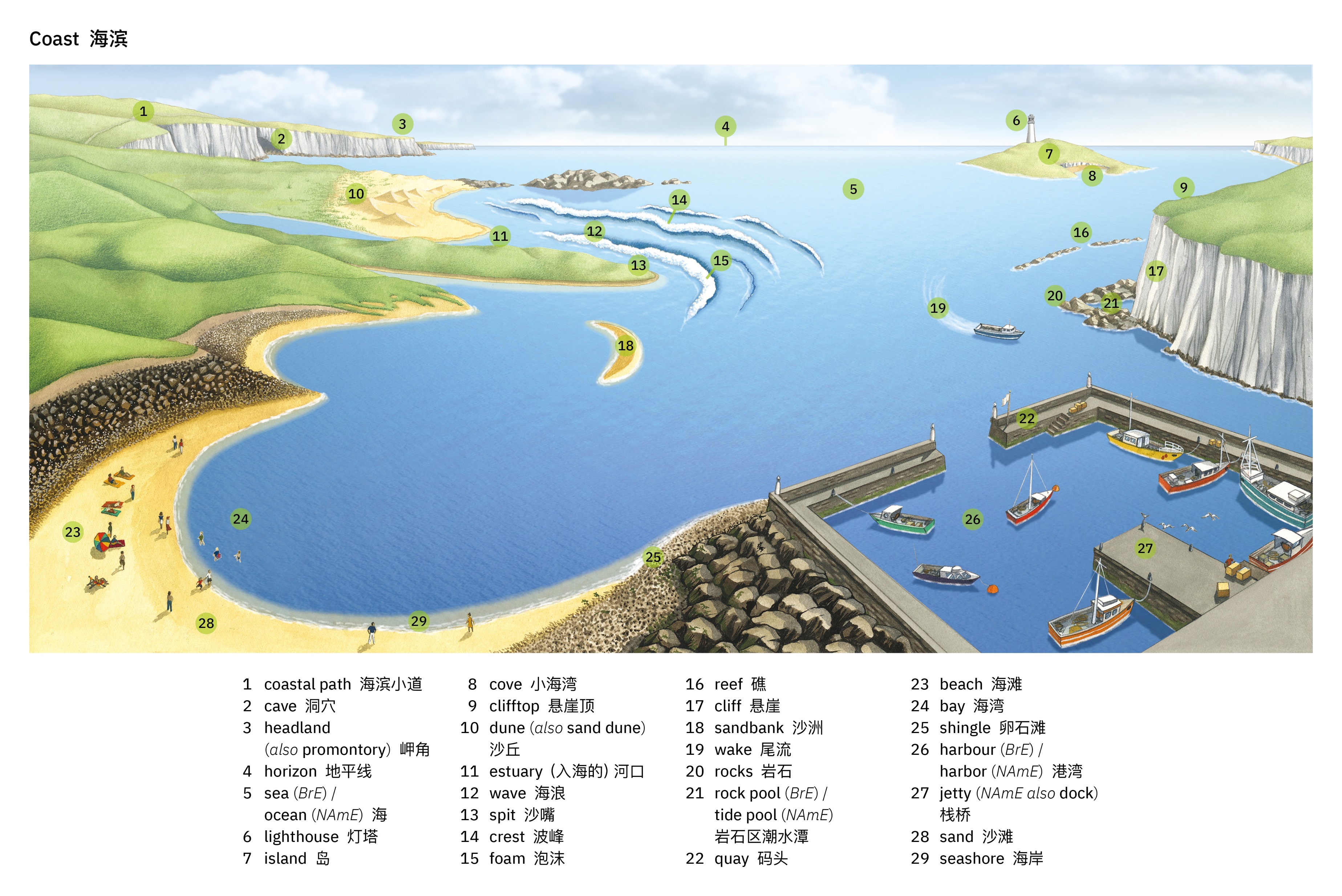
spit
Longman Dictionary of Contemporary English 5++LDOCE 5++spit1 /spɪt/ ●●○ verb (past tense and past participle spat /spæt/ or spit American English, present participle spitting) 1 liquid from your mouth 口水 [intransitive]HBH to force a small amount of saliva (=the liquid in your mouth) out of your mouth 吐口水,吐唾沫 Nick rolled down his window and spat. 尼克摇下窗子,啐了口唾沫。spit at/on/into A group of fans spat on the players as they left the field. 一群球迷在球员离开球场时朝他们吐口水。2 food/drink etc 食物/饮料等 [transitive]HBH to force something out of your mouth 吐,唾 Billy stood up slowly, rubbed his jaw, and spat blood. 比利慢慢站起来,揉揉下巴,吐了口血。spit something out Diana tasted her martini and quickly spat it out. 黛安娜尝了一口马丁尼酒,马上就吐了出来。3 RAIN 雨be spitting British EnglishHEM to be raining very lightly 下小雨 SYN drizzle You don’t need an umbrella – it’s only spitting. 你不用带雨伞,只飘着一点小雨。4 say STH 说话 (also spit out) [transitive]SAY to say something quickly in a very angry way 怒斥,怒叱 ‘Shut up!’, spat Maria furiously. “闭嘴。”玛丽亚怒叱道。5 spit it out spokenTELL A SECRET used to ask someone to tell you something that they seem too frightened or embarrassed to say 爽快地说出来〔用于叫人说其不敢或不愿说的话〕 Come on, Jean. Spit it out! 来吧,琼,一吐为快!6 small pieces 小片 [intransitive, transitive]SEND to send out small bits of something, for example fire or hot oil, into the air 迸溅〔火花、热油等〕 A log fire was crackling and spitting in the hearth. 圆木在壁炉里烧得噼啪作响,火星四溅。7. cat 猫 [intransitive]HBA if a cat spits, it makes short angry sounds 〔猫在愤怒时〕发出咕噜咕噜声8. be within spitting distance (of something) spokenNEAR to be very close to someone or something (离某人或某物)很近9. spit the dummy informal to react to something in a very angry way – used when suggesting that the person is behaving like a child and not reacting like an adult should 耍脾气,发脾气〔用于指某人生气时的行为像小孩子,而不像成人应该做的那样〕10 spit up phrasal verb American English if someone, especially a baby, spits up, they bring a small amount of food or drink up from their stomach out through their mouth 〔尤指婴儿〕呕吐spit something ↔ up I was a difficult child, always crying and spitting up my food. 我小时候很难哄,老是哭闹、呕吐。 On one occasion, our daughter spat up all over him. 有一次,我们的女儿吐了他一身。→ See Verb table
Examples from the Corpus
spit• He spat a bit as he spoke and Carrie dreaded the moment when she would have to shake hands and be spat at.• He spit a bone on to the floor and sent Goh to get another Tiger beer.• He spat a mouthful back into the cup.• The volcano began rumbling and spitting ash on July 3.• He and Meg are now spitting bile at one another through the Press.• I spat in my hand and gave Claude long, slipping strokes.• He was so offended by my cover that he spat on me.• He spat out enamel and blood.• "You're worthless!" Greg spat out.spit at/on/into• He spat a bit as he spoke and Carrie dreaded the moment when she would have to shake hands and be spat at.• Somebody spit at me.• Eli, stop spitting on the floor.• One of his gang'd spat on the floor.• She spat into the grass outside the privy.• If he had suggested this six months earlier, I would have spit at the ground.• She spit into the sink, then threw down her toothbrush.• A pedestrian spits on the window of a driver he thinks cut him off.• Bill was leaning on his cab, spitting at the wing mirror and half-heartedly polishing it with his sleeve.• Any moment now and she will spit on us, on life.spit something out• I tried a bite, but it was so bad, I spit it out.spit2 noun 1. [uncountable]HBH informal the watery liquid that is produced in your mouth 唾液,唾沫,口水 SYN saliva2. [countable]DFC a long thin stick that you put through meat so that you can turn it when cooking it over a fire 烤肉扦,炙扦子3. [countable]SG a long narrow piece of land that sticks out into the sea, into a river etc 岬,沙嘴〔伸入水域中的狭长陆地〕4 be the (dead) spit of somebody British English spokenSAME to look exactly like someone else 长得和某人一模一样 Sam is the dead spit of his dad. 萨姆长得和他爸爸一模一样。5 spit and polish informalCLEAN when something is thoroughly cleaned and polished 彻底的打扫擦洗 It was Christmas, so Ellen gave the dining room a little extra spit and polish. 圣诞节到了,埃伦把饭厅格外仔细地打扫了一遍。Examples from the Corpus
spit• Elizabeth and Anne contrived a spit for Felix's chickens and set them to roast.• He worked his way over to the window, opened it, and took a spit into the fresh biting coldness.• He freed a hand and wiped away the spit.• Those first learning to water start or carve gybe are best off in the flat water to windward by the spit.• Good food will be served from the spit.Origin spit1 Old English spittan spit2 1. (1200-1300) → SPIT12. Old English spituspit1 verbspit2 nounChinese
amount small Corpus to of a force
spit
spit1 /spɪt/ 
 verb (past tense and past participle spat /spæt/ or spit American English, present participle spitting)

Nick rolled down his window and spat.
spit at/on/into
A group of fans spat on the players as they left the field.
2. FOOD/DRINK ETC [transitive] to force something out of your mouth:
Billy stood up slowly, rubbed his jaw, and spat blood.
spit something out
Diana tasted her martini and quickly spat it out.
3. RAIN be spitting British English to be raining very lightly
SYN drizzle:
You don’t need an umbrella – it’s only spitting.
4. SAY SOMETHING (also spit out) [transitive] to say something quickly in a very angry way:
‘Shut up!’, spat Maria furiously.
5. spit it out spoken used to ask someone to tell you something that they seem too frightened or embarrassed to say:
Come on, Jean. Spit it out!
6. SMALL PIECES [intransitive and transitive] to send out small bits of something, for example fire or hot oil, into the air:
A log fire was crackling and spitting in the hearth.
7. CAT [intransitive] if a cat spits, it makes short angry sounds
8. be within spitting distance (of something) spoken to be very close to someone or something
9. spit the dummy informal to react to something in a very angry way – used when suggesting that the person is behaving like a child and not reacting like an adult should
spit up phrasal verb American English
if someone, especially a baby, spits up, they bring a small amount of food or drink up from their stomach out through their mouth
spit something ↔ up
I was a difficult child, always crying and spitting up my food.
On one occasion, our daughter spat up all over him.
spit2 noun
Origin: spitu1. [uncountable] informal the watery liquid that is produced in your mouth
SYN saliva
2. [countable] a long thin stick that you put through meat so that you can turn it when cooking it over a fire
3. [countable] a long narrow piece of land that sticks out into the sea, into a river etc
4. be the (dead) spit of somebody British English spoken to look exactly like someone else:
Sam is the dead spit of his dad.
5. spit and polish informal when something is thoroughly cleaned and polished:
It was Christmas, so Ellen gave the dining room a little extra spit and polish.
| I |
verb (past tense and past participle spat /spæt/ or spit American English, present participle spitting) Language: Old English
Origin: spittan
1. LIQUID FROM YOUR MOUTH [intransitive] to force a small amount of saliva (=the liquid in your mouth) out of your mouth:Origin: spittan
spit at/on/into
2. FOOD/DRINK ETC [transitive] to force something out of your mouth:
spit something out
3. RAIN be spitting British English to be raining very lightly
SYN drizzle:
4. SAY SOMETHING (also spit out) [transitive] to say something quickly in a very angry way:
5. spit it out spoken used to ask someone to tell you something that they seem too frightened or embarrassed to say:
6. SMALL PIECES [intransitive and transitive] to send out small bits of something, for example fire or hot oil, into the air:
7. CAT [intransitive] if a cat spits, it makes short angry sounds
8. be within spitting distance (of something) spoken to be very close to someone or something
9. spit the dummy informal to react to something in a very angry way – used when suggesting that the person is behaving like a child and not reacting like an adult should
spit up phrasal verb American English
if someone, especially a baby, spits up, they bring a small amount of food or drink up from their stomach out through their mouth
spit something ↔ up
| II |
noun Sense 2,3
Language: Old EnglishOrigin: spitu
SYN saliva
2. [countable] a long thin stick that you put through meat so that you can turn it when cooking it over a fire
3. [countable] a long narrow piece of land that sticks out into the sea, into a river etc
4. be the (dead) spit of somebody British English spoken to look exactly like someone else:
5. spit and polish informal when something is thoroughly cleaned and polished:
especially in
especially in