taekwondo
Longman Dictionary of Contemporary English 5++LDOCE 5++tae·kwon·do /taɪˈkwɒndəʊ $ -ˈkwɑːndoʊ/ noun [uncountable]  a style of fighting from Korea, and also a sport, in which you kick and hit but do not use weapons 跆拳道 → karate
a style of fighting from Korea, and also a sport, in which you kick and hit but do not use weapons 跆拳道 → karateExamples from the Corpus
taekwondo• Knockouts are not uncommon at taekwondo tournaments.• Because taekwondo was originally designed as an art of self-defence, blocking techniques are highly developed and refined.• After all, she's a top-flight taekwondo competitor herself.• He has, indeed, come to the crossroads of his taekwondo career.• In 1966 the first international taekwondo federation was formed.• The next influence on the development of taekwondo came from General Choi Hong Hi.• Stretching exercises are especially important to enable students to perform the fantastic kicks that are the hallmark of taekwondo.• This is why it is said that, to understand the taekwondo system, it is essential to understand the patterns.Origin taekwondo (1900-2000) Korean “art of hand-and-foot fighting”tae·kwon·do nounChineseSyllable
also and from style a of fighting Corpus sport, Korea, a
taekwondo
tae‧kwon‧do /taɪˈkwɒndəʊ $ -ˈkwɑːndoʊ/
 noun [uncountable]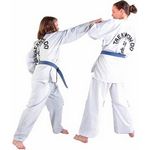
a style of fighting from Korea, and also a sport, in which you kick and hit but do not use weapons ⇨ karate
tae‧kwon‧do /taɪˈkwɒndəʊ $ -ˈkwɑːndoʊ/
noun [uncountable] Date: 1900-2000
Language: Korean
Origin: 'art of hand-and-foot fighting'
Language: Korean
Origin: 'art of hand-and-foot fighting'
a style of fighting from Korea, and also a sport, in which you kick and hit but do not use weapons ⇨ karate
See tae kwon do for more