tambourine
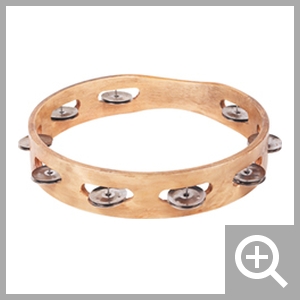
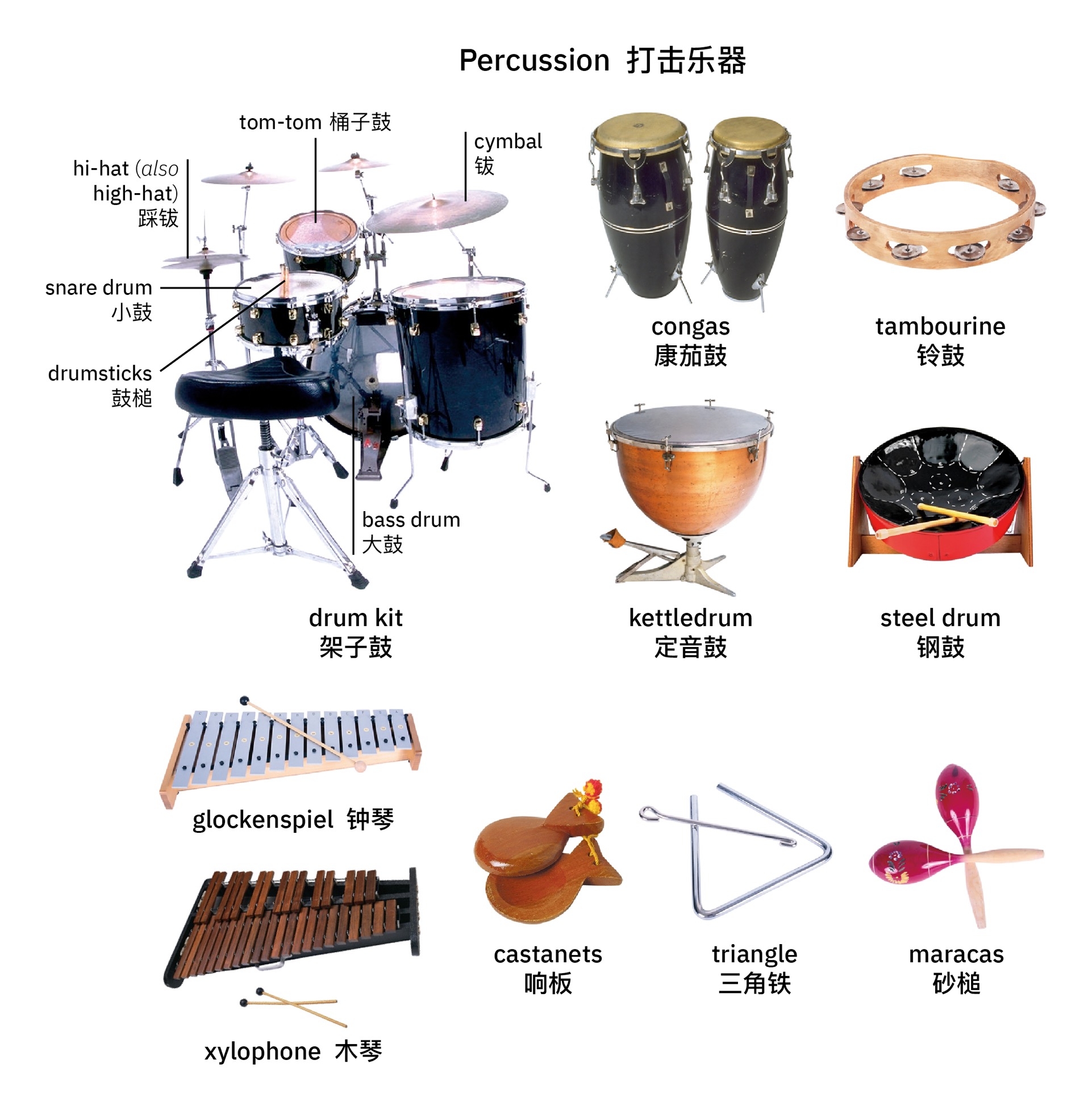
Longman Dictionary of Contemporary English 5++LDOCE 5++tam·bou·rine /ˌtæmbəˈriːn/ noun [countable]  APMa circular musical instrument consisting of a frame covered with skin or plastic and small pieces of metal that hang around the edge. You shake it or hit it with your hand. 铃鼓
APMa circular musical instrument consisting of a frame covered with skin or plastic and small pieces of metal that hang around the edge. You shake it or hit it with your hand. 铃鼓Examples from the Corpus
tambourine• Some one was beating what sounded like a tambourine, and, high above all this, Robert thought he heard a flute.• Directly in front of him were two wind-up monkeys, one with a tambourine and the other with a drum.• A church's liveliness should not be judged by the singing, dancing or tambourine playing.• The boys, the drums, the tambourines, the highway disappeared.• Yes, the monitors, the bass player, the tambourine - the lot.• Percy can play anything from the triangle to the tambourine.• It starts lean and mean, just a slash of overdriven guitar with tambourine keeping time.• Praise him with tambourines and dancing, Praise him with flute and strings.Origin tambourine (1500-1600) Old French tambourin, from tambour “drum”, from Arabic tanburtam·bou·rine nounChineseSyllable
of a consisting Corpus musical circular covered frame a instrument
See ldoce4158jpg for more
tambourine
tam‧bou‧rine /ˌtæmbəˈriːn/
 noun [countable]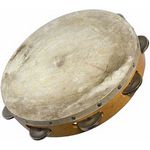
a circular musical instrument consisting of a frame covered with skin or plastic and small pieces of metal that hang around the edge. You shake it or hit it with your hand.
tam‧bou‧rine /ˌtæmbəˈriːn/
noun [countable] Date: 1500-1600
Language: Old French
Origin: tambourin, from tambour 'drum', from Arabic tanbur
Language: Old French
Origin: tambourin, from tambour 'drum', from Arabic tanbur
a circular musical instrument consisting of a frame covered with skin or plastic and small pieces of metal that hang around the edge. You shake it or hit it with your hand.