trachea
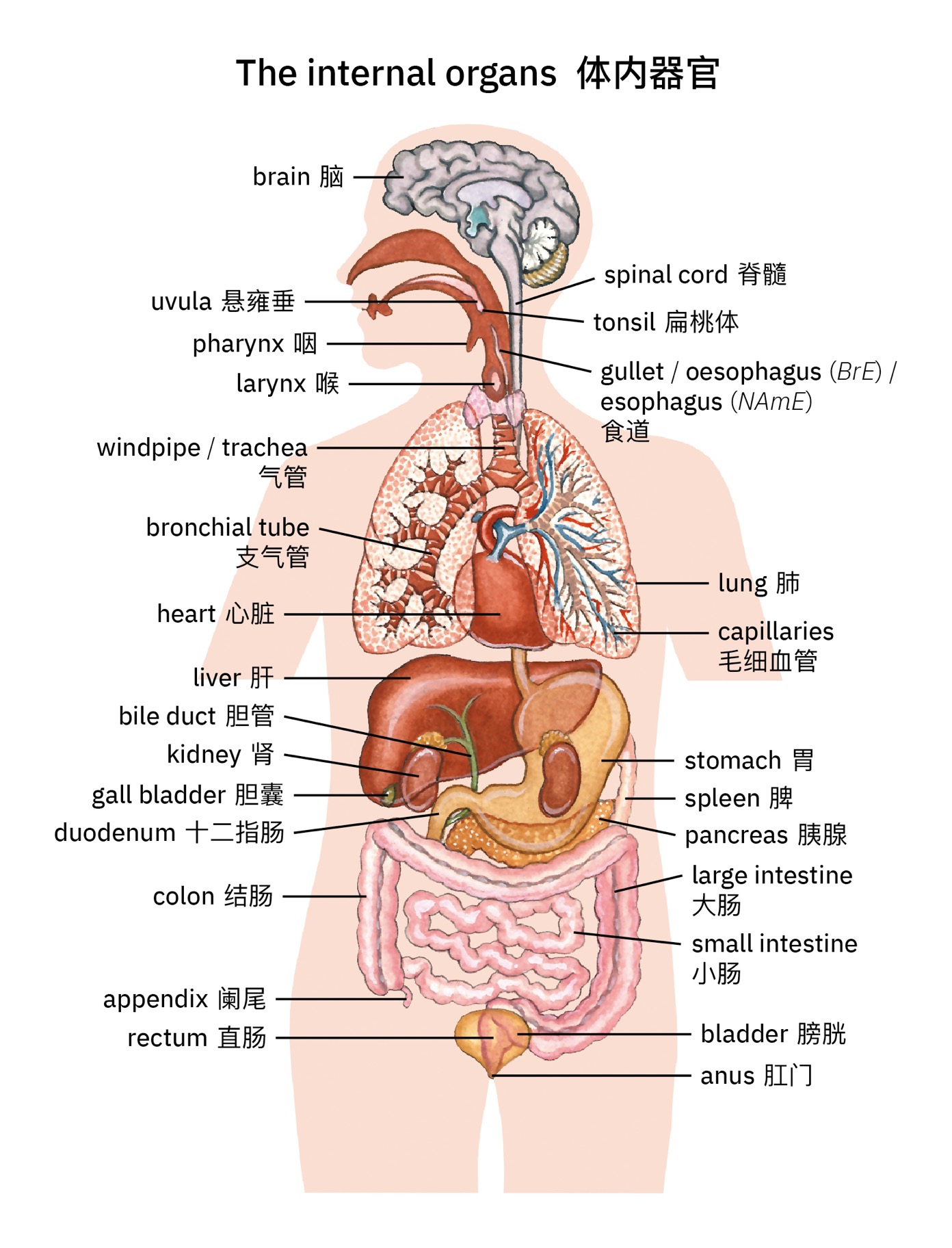
Longman Dictionary of Contemporary English 5++LDOCE 5++tra·che·a /trəˈkiːə $ ˈtreɪkiə/ noun (plural tracheas or tracheae /-ˈkiː-i $ -ki-iː/) [countable] technicalHB the tube that takes air from your throat to your lungs 气管
Examples from the Corpus
trachea• Larvae then travel via the bronchi, trachea and oesophagus to the gut.• And I chewed my lunchtime sandwich thoroughly, being careful not to get my trachea clogged up with cream cheese.• Their location in the trachea and bronchi and their size are diagnostic.• Copulation occurs around day seven in the trachea or bronchi after which the female grows rapidly.• Fistula formation - for example to the trachea - may then be the first sign of the true nature of the disease.• Development through to L5 takes place in the alveoli and bronchi, and the adults migrate to the trachea.• The L1 migrate up the trachea, are swallowed and pass out in the faeces.• Via the trachea and the oesophagus, they eventually reach the small intestine.Origin trachea (1300-1400) Medieval Latin Greek tracheia (arteria) “rough (artery)”, from trachys “rough”tra·che·a nounChineseSyllable
your from the your Corpus takes to that air throat tube
trachea
tra‧che‧a /trəˈkiːə $ ˈtreɪkiə/
 noun (plural tracheas or tracheae /-ˈkiː-i $ -ki-iː/) [countable]
tra‧che‧a /trəˈkiːə $ ˈtreɪkiə/
noun (plural tracheas or tracheae /-ˈkiː-i $ -ki-iː/) [countable] Date: 1300-1400
Language: Medieval Latin
Origin: Greek tracheia (arteria) 'rough (artery)', from trachys 'rough'
technical the tube that takes air from your throat to your lungs
Language: Medieval Latin
Origin: Greek tracheia (arteria) 'rough (artery)', from trachys 'rough'