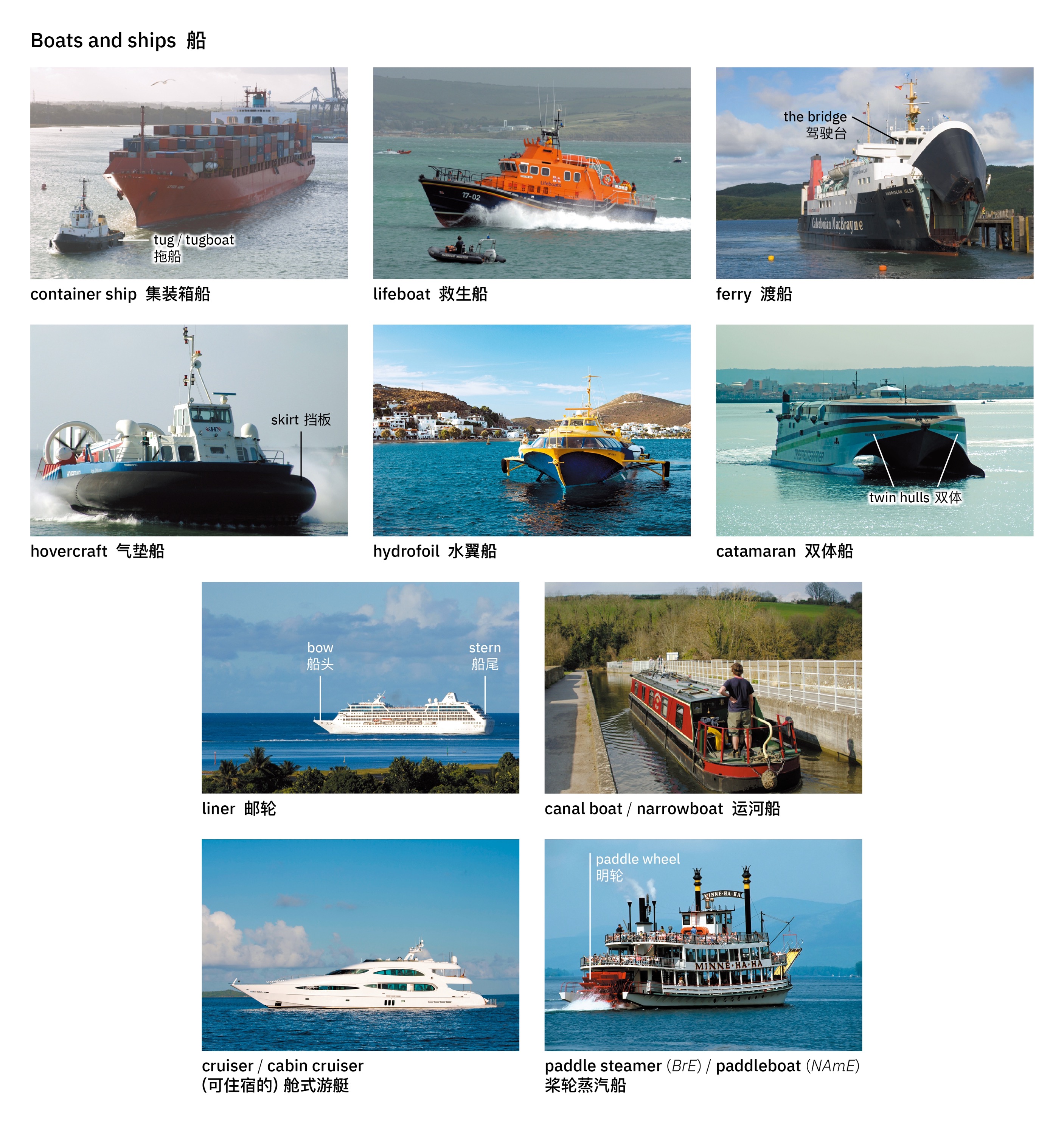
tug
Longman Dictionary of Contemporary English 5++LDOCE 5++tug1 /tʌɡ/ ●●○ verb (tugged, tugging) 1 PULL[intransitive, transitive] to pull with one or more short, quick pulls 〔迅速地〕拉,拖,拽 The woman gently tugged his arm. 那女人轻轻拽了拽他的胳膊。tug at/on something Joe was tugging at her sleeve. 乔在拽她的袖子。► see thesaurus at pull2 [transitive always + adverb/preposition] British English to pull a piece of clothing quickly onto your body 〔迅速地〕穿衣服tug something on Alice was tugging on a sweater. 艾丽斯正在穿毛衣。3. tug at somebody’s heart/heartstrings written to make someone feel sympathy for someone or something 触动某人的心/心弦→ See Verb table
Examples from the Corpus
tug• But he had worked one hand loose and he made a leap as Jack tugged.• You have to tug a little to break the seal, and then the door opens.• Then, just when it seemed to have settled, it made a sharp sideways movement, tugging against the halter.• She tugged at her skirt and adjusted her waistband.• "Come on, " Alice said, tugging at his hand.• We tugged at the door but it still wouldn't open.• The little girl was tugging her mother's sleeve, trying to get her attention.• As if reading his mind Maggie tugged him across in front of her so that he could comfort his wife.• She tugged it off the body.• As they tugged it straight the wind bellied it out, taut as a sail.• Marine biologists used to study life in the ocean deeps by tugging nets behind boats and examining what they dragged up.tug2 noun [countable] 1. (also tug boat)TTW a small strong boat used for pulling or guiding ships into a port, up a river etc 拖船2 [usually singular]PULL a sudden strong pull 猛拉,拖,拽 She removed the bandage with a sharp tug. 她猛地一拉,扯下绷带。3 [usually singular] a strong and sudden feeling 一阵强烈的感情tug of Kate felt a tug of jealousy. 凯特感到一阵妒忌。Examples from the Corpus
tug• I felt a tug when the skids hit treetops.• Tony gave Simon's T-shirt a tug, and they both left the room.• A tug at his trouser leg awakened him from his reverie.• A tug hooting from the river.• At Blisworth on the Grand Union Canal tugs were used from 1870 to 1936.• If you were in the crowd, you couldn't fail to feel an emotional tug.• I seized the door handle and gave it a good tug.• The ropes still held, but one good tug would part them like silk.• The crew abandoned the tug, forcing the Coast Guard to send a swimmer out in high seas to rescue them.• After so much delay, it never took more than one or two tugs.with one or Corpus more to pull
tug
tug1 /tʌɡ/ 
 verb (past tense and past participle tugged, present participle tugging)
1. [intransitive and transitive] to pull with one or more short, quick pulls:

The woman gently tugged his arm.
tug at/on something
Joe was tugging at her sleeve.
2. [transitive always + adverb/preposition] British English to pull a piece of clothing quickly onto your body
tug something on
Alice was tugging on a sweater.
3. tug at sb’s heart/heartstrings written to make someone feel sympathy for someone or something
▪ pull to make something or someone move in the direction that your hands are moving: He pulled her towards him and kissed her. | Sam was pulling on his socks.
▪tug to pull something suddenly with a short quick movement, often to get someone’s attention: ‘Look,’ he said, tugging at his brother’s sleeve. | I tugged at the drawer but it wouldn’t open.
▪drag to pull something along the ground, especially because it is heavy: If we can’t lift the piano, we’ll have to drag it.
▪haul to pull something big and heavy using a lot of effort, especially upwards and using a rope: They hauled their boats further up the beach. | fishermen hauling in their nets
▪heave to pull or lift something very heavy, especially with one movement: He heaved the sack of sand onto his shoulder.
▪draw formal to pull something or someone gently in a particular direction: Lisa reached for his hand but he drew it away.
▪pull to be attached to a vehicle or piece of machinery and make it move behind you in the direction you are going: Ten dogs were pulling a sledge over the ice. | a tractor pulling a plough
▪tow to pull a vehicle behind – used about a vehicle, a boat, or a horse pulling something using a rope or chain: The car in front of us was towing a caravan. | Horses were used to tow the boats along the canals.
▪draw to pull a vehicle such as a carriage – used especially about horses doing this: a carriage drawn by four horses | a horse-drawn cart
tug2 noun [countable]
1. (also ˈtug boat) a small strong boat used for pulling or guiding ships into a port, up a river etc
2. [usually singular] a sudden strong pull:
She removed the bandage with a sharp tug.
3. [usually singular] a strong and sudden feeling
tug of
Kate felt a tug of jealousy.
| I |
verb (past tense and past participle tugged, present participle tugging)1. [intransitive and transitive] to pull with one or more short, quick pulls:
tug at/on something
2. [transitive always + adverb/preposition] British English to pull a piece of clothing quickly onto your body
tug something on
3. tug at sb’s heart/heartstrings written to make someone feel sympathy for someone or something
| THESAURUS |
▪
▪
▪
▪
▪
▪
▪
▪
| II |
noun [countable]1. (also ˈtug boat) a small strong boat used for pulling or guiding ships into a port, up a river etc
2. [usually singular] a sudden strong pull:
3. [usually singular] a strong and sudden feeling
tug of
pull to hold sth and move it in a particular direction; to hold or be attached to a vehicle and move it along behind you 指向某方向拖、拉、牵引 :◆ Pull the chair nearer the table. 把椅子再往桌子这边拉近些。 ◆ They use oxen to pull their carts. 他们用牛拉车。 drag to pull sb/sth in a particular direction or behind you, usually along the ground, and especially with effort 通常指使劲在地上拖、拉、拽 :◆ The sack is too heavy to lift—you'll have to drag it. 这麻袋太重了,提不起来。你得拖着走。 draw ( to move sb/sth by pulling them/it gently; to pull a vehicle such as a carriage指拖动、拉动、牵引、拖车 :◆ I drew my chair closer to the fire. 我把椅子向火旁拉近了点。 ◆ a horse-drawn carriage马车 haul to pull sb/sth to a particular place with a lot of effort 指用力拖、拉、拽 :◆ Fishermen were hauling in their nets. 渔民在拉网。
drag or haul? 用 drag 还是 haul?
tow to pull a car, boat or light plane behind another vehicle, using a rope or chain 指用绳索拖、拉、牵引(汽车、船或轻型飞机) :◆ Our car was towed away by the police. 我们的汽车被警察拖走了。 tug to pull sb/sth hard in a particular direction 指朝某一方向用力拖、拉、拽 :◆ She tried to escape but he tugged her back. 她试图逃跑,但他把她拽了回来。
Patterns
to pull/drag/draw/haul/tow/tug sb/sth along/down/towards sthto pull/drag/draw/haul/tow sb/sth behind you to pull/drag/draw/haul a cart/sledge to pull/draw a coach/carriage to pull/haul/tow a truck horses pull/draw/haul sthdogs pull/drag/haul sth