wake
Longman Dictionary of Contemporary English 5++LDOCE 5++wake1 /weɪk/ ●●● S2 W3 (also wake up) verb (past tense woke /wəʊk $ woʊk/, past participle woken /ˈwəʊkən $ ˈwoʊ-/) [intransitive, transitive] 1 WAKE UP/GET UPto stop sleeping, or to make someone stop sleeping 睡醒,醒来;唤醒,弄醒 When she woke, the sun was streaming through the windows. 她醒来时,阳光泻入窗内。 Try not to wake the baby. 尽量不要吵醒宝宝。wake to Nancy woke to the sound of birds outside her window (=she heard birds singing when she woke). 南希在窗外的鸟鸣声中醒来。2 wake up phrasal verb a) to stop sleeping, or to make someone stop sleeping 醒;叫醒 James usually wakes up early. 詹姆斯通常醒得早。wake somebody ↔ up I’ll wake you up when it’s time to leave. 到走的时候我会叫醒你。b) LISTENto start to listen or pay attention to something 开始听着;开始注意 Wake up (=give me your attention) at the back there! 后面的人注意!c) wake up and smell the coffee American English spokenREALIZE used to tell someone to recognize the truth or reality of a situation 面对现实,正视事实3 wake up to something phrasal verb REALIZEto start to realize and understand a danger, an idea etc 开始觉察[认识]到〔危险、想法等〕 It’s time you woke up to the fact that it’s a tough world. 你该清醒地认识到这是一个残酷的世界了。→ See Verb table
Examples from the Corpus
wake• It was impossible to wake anyone in the house.• Then Mrs Dempster woke him as usual with a cup of tea, and he felt better.• But do not try to wake him into a higher level.• The windows of the house glowed suddenly bright, like the eyes of some monster waking in the dark.• Try not to wake the baby if you go in the bedroom.• Dad said he woke up at five this morning.• Fourteenth-century Wandsworth was waking up, deciding it could have another ten minutes, and turning over in its warm straw.• And he woke up with more than just his stomach growling.wake2 noun [countable] 1 in the wake of something AFTERif something, especially something bad, happens in the wake of an event, it happens afterwards and usually as a result of it 〔尤指不好的事〕紧随某事而来;作为某事的后果 Famine followed in the wake of the drought. 旱灾之后,饥荒紧随而来。2 in somebody’s/something’s wake AFTERbehind or after someone or something 紧跟某人/某物后面 The car left clouds of dust in its wake. 汽车驶过,扬起团团尘土。3. MXthe time before or after a funeral when friends and relatives meet to remember the dead person 守灵4. TTW[usually singular] the track made behind a boat as it moves through the water 〔船开过后留下的〕航迹,尾流Examples from the Corpus
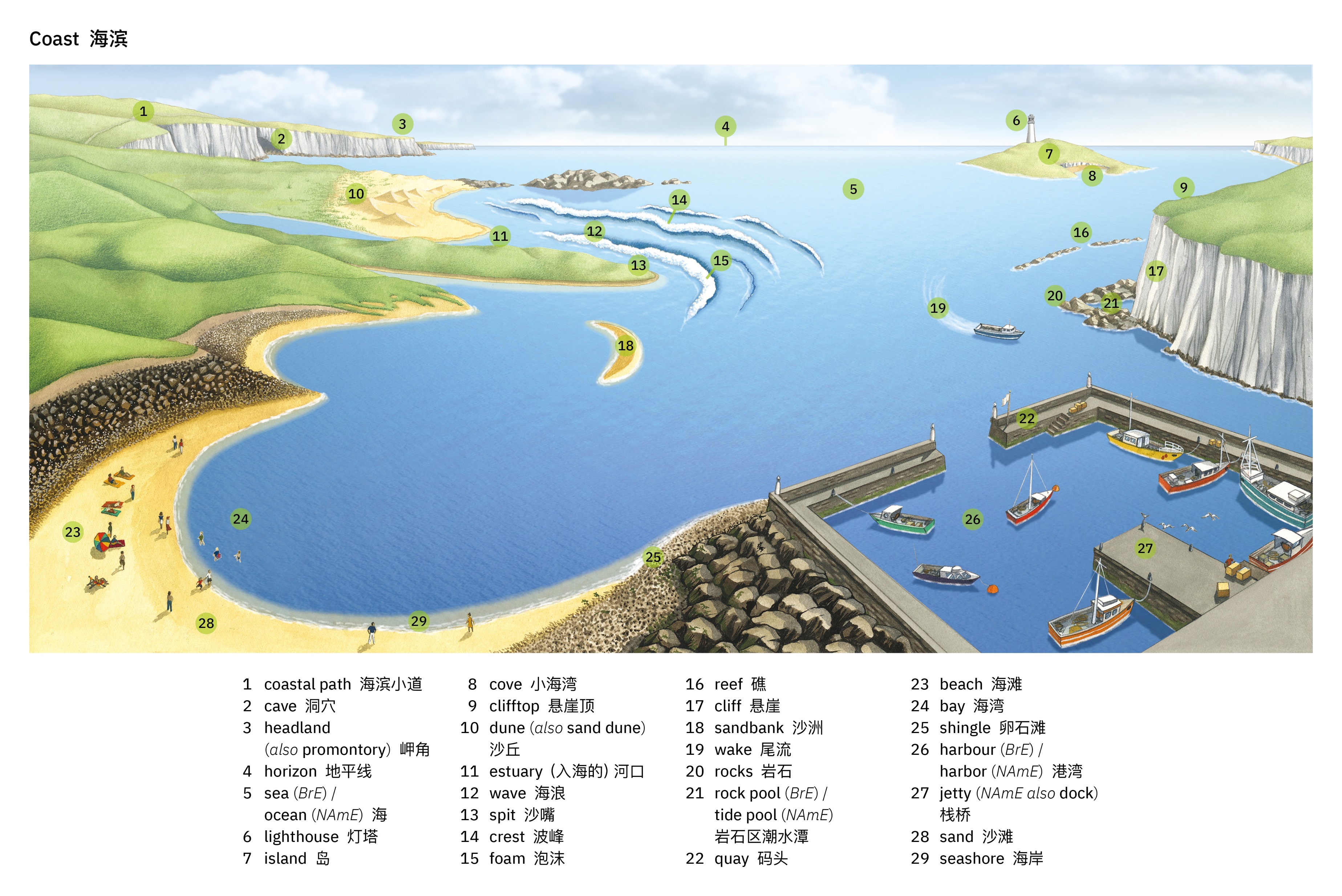
wake• On the way up, the slightest connection with the deceased or his family was enough reason to attend a wake.• But if Nader is having problems capturing the magical double-digit support level, his nearest third-party rivals are floundering in his wake.• In its wake, tens of thousands are slipping off, quietly once more, to sanctuaries abroad.• The interest in the sale comes in the wake of Durham County Council's decision to close eight of its homes.• Salomon discards a pay plan in the wake of a string of key departures.• In the wake of the Clause, the Stonewall Trust was set up.• In each half of the wake the eddy consists of two parallel vortex tubes of opposite sense.• I was like a water-skier without the skis, dragged through the wake of an uncompromising culture by my neck.Origin wake1 Old English wacan “to wake up” and wacian “to be awake” wake2 1. (1400-1500) Perhaps from Dutch wak or Middle Low German wake, from Old Norse vok “hole in the ice, especially as made by a boat”2. (1400-1500) → WAKE1wake1 verbwake2 nounChinese
someone stop to to or sleeping Corpus sleeping, make stop
wake
wake1 S2 W3 /weɪk/ 
 (also wake up) verb (past tense woke /wəʊk $ woʊk/, past participle woken /ˈwəʊkən $ ˈwoʊ-/) [intransitive and transitive]

When she woke, the sun was streaming through the windows.
Try not to wake the baby.
wake to
Nancy woke to the sound of birds outside her window (=she heard birds singing when she woke).
wake up phrasal verb
1. to stop sleeping, or to make someone stop sleeping:
James usually wakes up early.
wake somebody ↔ up
I’ll wake you up when it’s time to leave.
2. to start to listen or pay attention to something:
Wake up (=give me your attention) at the back there!
3. wake up and smell the coffee American English spoken used to tell someone to recognize the truth or reality of a situation
wake up to something phrasal verb
to start to realize and understand a danger, an idea etc:
It’s time you woke up to the fact that it’s a tough world.
wake2 noun [countable]
Origin: Perhaps from Dutch wak or Middle Low German wake, from Old Norse vok 'hole in the ice, especially as made by a boat'1. in the wake of something if something, especially something bad, happens in the wake of an event, it happens afterwards and usually as a result of it:
Famine followed in the wake of the drought.
2. in sb’s/sth’s wake behind or after someone or something:
The car left clouds of dust in its wake.
3. the time before or after a funeral when friends and relatives meet to remember the dead person
4. [usually singular] the track made behind a boat as it moves through the water
| I |
(also wake up) verb (past tense woke /wəʊk $ woʊk/, past participle woken /ˈwəʊkən $ ˈwoʊ-/) [intransitive and transitive] Language: Old English
Origin: wacan 'to wake up' and wacian 'to be awake'
to stop sleeping, or to make someone stop sleeping:Origin: wacan 'to wake up' and wacian 'to be awake'
wake to
wake up phrasal verb
1. to stop sleeping, or to make someone stop sleeping:
wake somebody ↔ up
2. to start to listen or pay attention to something:
3. wake up and smell the coffee American English spoken used to tell someone to recognize the truth or reality of a situation
wake up to something phrasal verb
to start to realize and understand a danger, an idea etc:
| II |
noun [countable] Sense 1-2,4
Date: 1400-1500Origin: Perhaps from Dutch wak or Middle Low German wake, from Old Norse vok 'hole in the ice, especially as made by a boat'
2. in sb’s/sth’s wake behind or after someone or something:
3. the time before or after a funeral when friends and relatives meet to remember the dead person
4. [usually singular] the track made behind a boat as it moves through the water
Wake (up) is the most common of these verbs. It can mean somebody has finished sleeping上述动词中 wake (up) 最常用,可表示睡醒 :◆ What time do you usually wake up? 你通常什么时候醒来? or that somebody or something has disturbed your sleep. 亦指弄醒、唤醒 :◆ The children woke me up. 孩子们把我吵醒了。 ◆ I was woken (up) by the telephone. 电话铃声把我吵醒了。 The verb awake is usually only used in writing and in the past tenseawoke .动词 awake 通常只用于书面语,而且用过去时 awoke :◆ She awoke to a day of brilliant sunshine. 她醒来时是阳光灿烂的一天。 Waken andawaken are much more formal.Awaken is used especially in literature.* waken 和 awaken 要正式得多。awaken 尤用于文学作品 :◆ The Prince awakened Sleeping Beauty with a kiss. 王子的吻唤醒了睡美人。 Awake is also an adjective.* awake 亦作形容词 :◆ I was awake half the night worrying. 我忧心忡忡,半宿不能成眠。 ◆ Is the baby awake yet? 宝宝醒来了吗? Waking is not used in this way.* waking 不能这样用。